
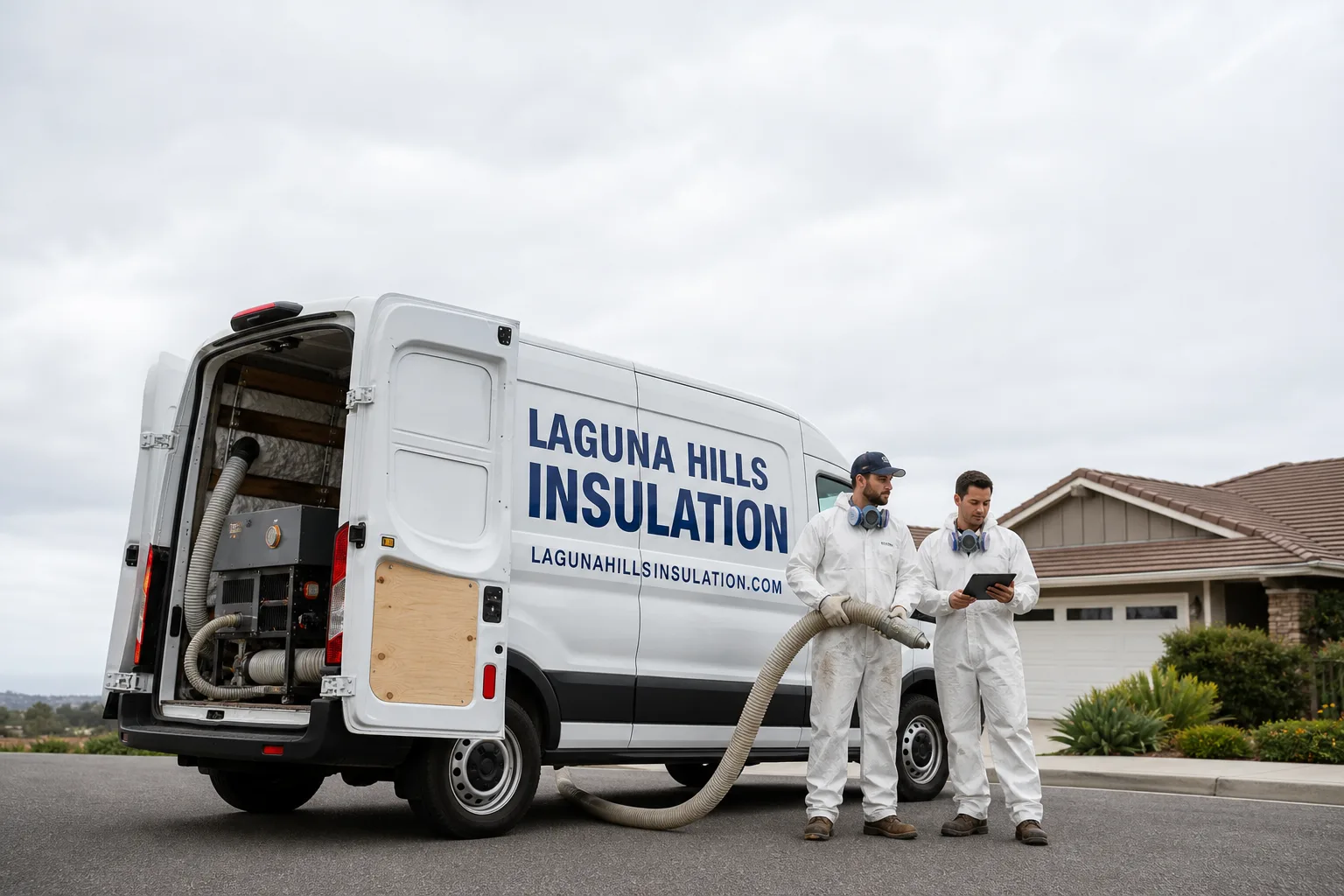
Fast, Reliable Attic Insulation Across Trabuco Canyon
Attic insulation in Trabuco Canyon isn’t a one-size-fits-all job. Most homes here sit on large canyon lots or against the foothills, with vaulted ceilings, exposed beams, and open attic framing that standard batt layouts simply don’t fit. We’re Laguna Hills Insulation, and we work across Trabuco Canyon, 92678 and 92679, from the ranches off Live Oak Canyon Road to the custom builds above O’Neill Regional Park. We stock eight manufacturer brands and install three different methods, so the right material wins, not whatever’s easiest to haul up the ladder. Call (866) 393-6041 for a straight answer and a free estimate.
Why Laguna Hills Insulation Is Trabuco Canyon’s Preferred Attic Insulation Company
We’ve spent enough time in Trabuco Canyon attics to know what’s actually up there. Many of these homes are 1970s-to-2000s custom builds with irregular rafter spacing, cathedral ceilings that were never properly vented, and original insulation that’s compressed, rodent-damaged, or just plain inadequate for canyon temperature swings. Homeowners call us after other contractors give them a blank stare when they see exposed-beam framing or ask about WUI code compliance.
Garrett Lund, who leads our company, built Laguna Hills Insulation around a material-agnostic approach. We don’t push fiberglass because we have a warehouse full of it. We’ll tell you if blown-in GreenFiber cellulose is the better fit for your open attic, or if closed-cell spray foam from Icynene or Demilec makes more sense for that unvented vaulted ceiling. The response time to Trabuco Canyon is typically same-day or next-day for estimates, and we keep our schedule flexible for canyon homeowners who need work done before fire season peaks.
Our reputation in Trabuco Canyon comes from doing the awkward jobs well. Sloped attics, detached garages, barns with living quarters above, room additions with no insulation at all. We’ve seen it all off Trabuco Canyon Road and we don’t flinch. When you call, you’re talking to people who know your neighborhood, not a call center in another state.
Radiant Barrier in Trabuco Canyon
Radiant Barrier in Trabuco Canyon is one of the most effective upgrades you can make for summer comfort, because the canyon’s inland position means attics here routinely hit 130°F or more during July and August heat waves. A radiant barrier is a reflective foil layer installed under the roof deck that bounces radiant heat back out before it can penetrate your insulation and heat up your living space. In a canyon home with a dark composition shingle roof and full afternoon sun exposure, that’s often the difference between an upstairs that’s tolerable and one that’s unusable from 3pm onward.
Radiant Heat in Vaulted Ceilings
Vaulted and cathedral ceilings give radiant heat a direct path down into your rooms. In many Trabuco Canyon custom homes, there’s only a narrow cavity between the roof deck and the drywall, with little room for bulky insulation. A radiant barrier stapled to the underside of the roof deck works in that tight space where batts won’t fit, cutting the heat transfer before it enters the cavity.
What Trabuco Canyon Homeowners Pay
For a typical 1,500 to 2,500 square foot attic in Trabuco Canyon, professionally installed radiant barrier runs $1,200 to $2,800 depending on roof pitch, access, and whether we’re also air-sealing the framing. Homes with very steep roofs or tight access hatches off the canyon slopes fall toward the higher end. We’ll give you a firm number before any work starts.
Attic Cleaning Services in Trabuco Canyon
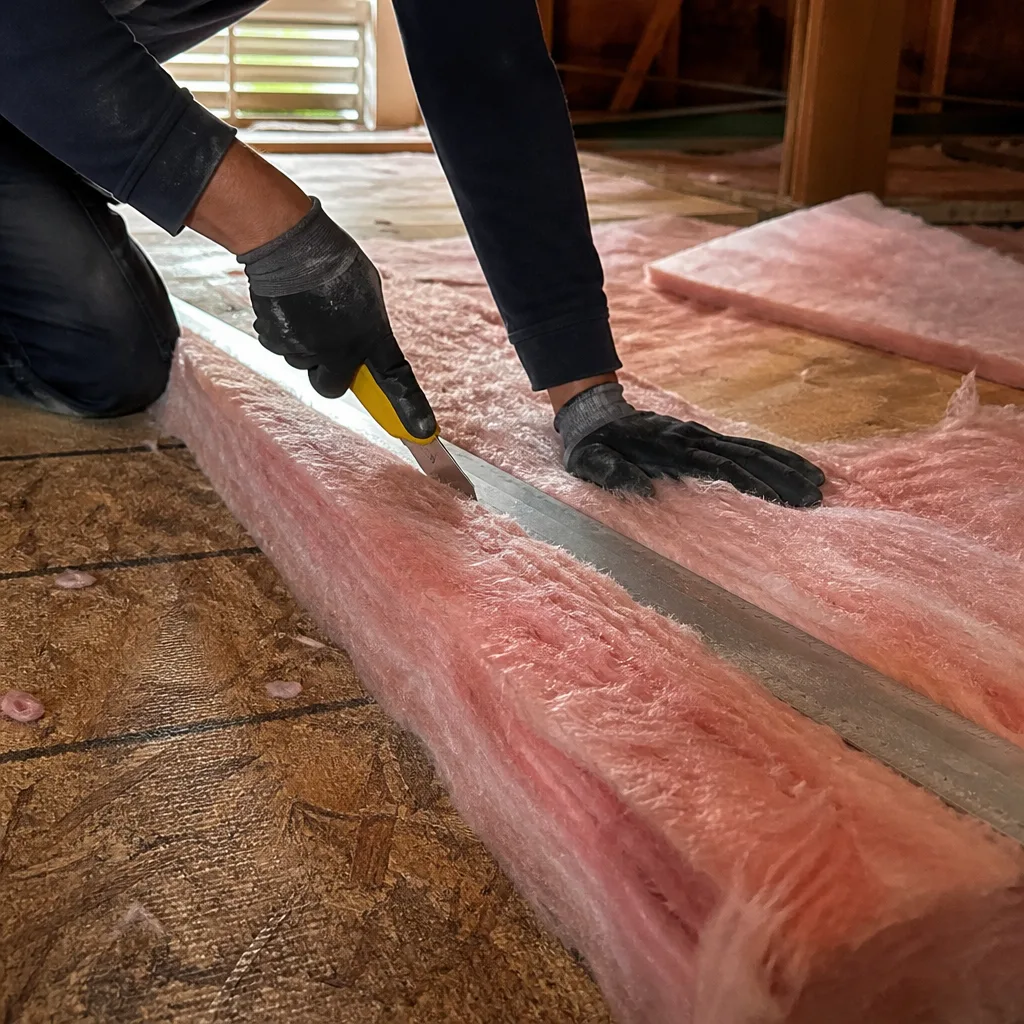
Attic Cleaning Services in Trabuco Canyon are not just about tidiness. Between the Santa Ana winds and the surrounding chaparral, canyon attics accumulate dust, rodent droppings, old nesting material, and dead insects faster than coastal homes. That debris holds moisture against your insulation, reduces its R-value, and creates an environment where rodents and insects keep coming back. Before we add insulation, we almost always recommend removing the old stuff and cleaning the space properly.
Rodent and Pest Residue Removal
Canyon properties back up to open space, which means rats, mice, and squirrels are persistent. We remove contaminated insulation, sanitize the affected areas, and prep the space so the new insulation goes in clean. If you’re hearing scratching in the attic near the ridge line at night, call us before the damage spreads.
Typical Attic Cleaning Costs in Trabuco Canyon
Full attic cleaning on a standard Trabuco Canyon home, including old insulation removal and disposal, usually falls between $900 and $1,800. Larger custom homes with multiple attic sections or detached garage attics can run $2,000 to $3,500. We’ll quote the exact scope after seeing the space, and estimates are always free.
What happens when you call
- 1
A real person answersNo phone trees — you reach a local pro.
- 2
You get an upfront price rangeHonest numbers before anyone is dispatched.
- 3
A background-checked tech heads outLicensed & insured, dispatched right away.
- 4
You approve before work beginsNothing starts until you say go.
Trusted Brands We Service in Trabuco Canyon
We install and service insulation from Owens Corning, Johns Manville, Knauf, and Rockwool, among the eight manufacturer lines we carry. That matters in Trabuco Canyon because different homes need different material properties. A 1980s ranch with a standard attic might do fine with Owens Corning blown-in fiberglass. A canyon custom home with a cathedral ceiling and WUI requirements might need Rockwool mineral wool, which is fire-resistant and moisture-resistant by nature. We keep inventory across those brands so Trabuco Canyon customers don’t wait weeks for material to arrive. If you need a top-up or a full replacement, we can usually schedule within a few days.
For a deeper look at what we do, see our Attic Insulation service page, which covers methods and material options in detail. And if you’re weighing options across the area, our Attic Insulation in Trabuco Canyon hub gives you the canyon-specific picture.
Common Attic Insulation Problems We See in Trabuco Canyon Homes
- Slumped and compressed batts in vaulted cavities. The 1970s-through-1990s custom homes off Live Oak Canyon Road often had fiberglass batts stuffed into irregular rafter bays. Over decades, they sag, tear, and leave bare spots where radiant heat pours straight through. We see it on nearly every cathedral ceiling we open up.
- Wind-driven air infiltration through exposed-beam penetrations. Santa Ana winds push air through gaps where beams meet the roof deck, where can lights poke through, and where framing doesn’t line up. Your attic becomes a wind tunnel, and your conditioned air leaks out faster than insulation alone can fix.
- Uneven blown-in insulation from sloped attics. Open attics over the great room or upstairs bedrooms often have sloped or irregular floor framing. Loose-fill insulation drifts downhill, settles into low spots, and leaves high points thin. That’s a direct R-value loss and, in a WUI zone, a gap in ignition-resistant coverage.
- Detached garages, barns, and outbuildings with no insulation at all. Equestrian properties and large-lot homes in Trabuco Canyon often have finished rooms above garages or barns that were built without any thermal barrier. Those rooms bake in summer and freeze in winter, and they need a completely custom insulation approach.
Pricing for Attic Insulation in Trabuco Canyon, CA
You’ll get honest numbers from us, not vague ranges that stretch from “cheap” to “we’ll see what we can get.” Here’s the reality for Trabuco Canyon’s market:
- Blown-in attic insulation (top-up or new): $1,400 to $3,200 for a typical 1,200 to 2,000 square foot attic, depending on depth, material, and whether old insulation needs removal.
- Attic batt insulation: $1,800 to $4,000 for full replacement, with cathedral ceilings and tight canyon access pushing toward the higher end.
- Spray foam (open-cell or closed-cell): $2,800 to $7,500 for a full attic application. Closed-cell from Icynene or Demilec runs more, but it creates both an air barrier and a thermal barrier in a single pass, which matters in WUI zones.
- Radiant barrier: $1,200 to $2,800 as outlined above.
- Attic cleaning and insulation removal: $900 to $3,500 depending on attic size and contamination level.
Every estimate is free, and we’ll walk the attic with you if it’s safe to access. Call (866) 393-6041 and we’ll give you a real number, not a guess.
We Also Serve Cities Near Trabuco Canyon
Our crews work throughout the canyon foothills and surrounding communities. We regularly handle attic insulation projects in Rancho Santa Margarita, Foothill Ranch, Portola Hills, and Coto De Caza. If you’re nearby and dealing with a hot upstairs, a drafty cathedral ceiling, or an attic that hasn’t been touched in decades, call us at (866) 393-6041 and we’ll come out.
Serving Trabuco Canyon, CA — Our Local Coverage Area
We’re based in the Trabuco Canyon area and know this community well. Use the map below to see our service coverage — if you’re nearby, we can almost certainly help.
FAQs About Attic Insulation in Trabuco Canyon
Many homes in Trabuco Canyon fall within designated Wildland-Urban Interface zones, where building codes require ignition-resistant construction details, and that includes attic assemblies. In practical terms, that means your attic insulation and air-sealing work should reduce the risk of ember intrusion through vents, eaves, and framing gaps. We specify mineral wool such as Rockwool in WUI-sensitive areas because it’s non-combustible and resists moisture, and we recommend air-sealing the attic floor before adding insulation. Call (866) 393-6041 and we’ll check your property’s specific zone.
Vaulted and cathedral ceilings have very little room between the roof deck and the interior ceiling, so standard batt insulation either doesn’t fit or gets compressed and loses its R-value. In Trabuco Canyon’s custom canyon homes, these cavities are often unvented or poorly vented, which traps heat and moisture. We handle these with spray foam where the cavity is sealed, or a combination of air-sealing, baffles, and a radiant barrier where there’s some airflow. One size does not fit all. Call us for an assessment of your specific ceiling assembly.
Trabuco Canyon runs noticeably hotter than coastal Orange County in summer and can dip below freezing on winter nights, which means your attic insulation has to handle both radiant heat gain and conductive heat loss. Fiberglass alone loses effectiveness in both directions if it’s installed with gaps or compressed. We typically recommend a higher R-value than coastal homes need, plus air-sealing to stop the thermal stack effect that pulls hot air up and out in winter. The right spec for a canyon home is genuinely different from a Laguna Beach or Dana Point attic.
Yes, and it’s one of the most overlooked problems in Trabuco Canyon. Santa Ana winds can gust 40 to 60 mph through the canyons, driving air into any crack, gap, or penetration in your attic framing. Loose-fill insulation gets disturbed, wind-driven dust and ember material accumulate, and conditioned air leaks out. We air-seal attic floors, baffle the eaves properly, and make sure the insulation is installed densely enough to resist wind disturbance. If you hear whistling in the attic during a Santa Ana event, that’s a air-sealing failure, not just a nuisance.
Yes, and we do it regularly. Many Trabuco Canyon properties have detached structures with rooms above, workshop spaces, or living quarters that were never insulated. We’ll assess each building separately, because a barn with a metal roof needs a completely different approach than a garage with a finished room above it. We’ve done everything from full spray foam encapsulation of garage ceilings to blown-in work in barn lofts. Call (866) 393-6041 and describe what you have, and we’ll tell you what’s realistic.
A Local Insight: WUI Codes and Canyon Climate Change the Spec
Here’s what makes Trabuco Canyon attic insulation genuinely different from the coastal Orange County work we do 20 minutes away. In a Newport Beach or Laguna Niguel tract home, the job is usually straightforward: add R-30 or R-38, meet basic code, and move on. In Trabuco Canyon, we’re working inside a Wildland-Urban Interface zone where the roof assembly, attic ventilation, and insulation choices all interact with fire-hardening requirements. Embers can get into attic spaces through ridge vents, gable vents, and soffit gaps, and once they’re in, fluffy fiberglass can hold them against the wood framing. That’s why we often recommend Rockwool in canyon attics. It’s non-combustible. It doesn’t hold embers. It still delivers strong R-value and it resists the moisture that comes from temperature swings. If your home is in the WUI, your insulation isn’t just about comfort. It’s part of your fire defense.
We were on a vaulted-ceiling custom home off Live Oak Canyon Road earlier this year. The open attic over the great room was pulling hot canyon air through unsealed framing gaps, and the 1970s-era batts had slumped away from the rafters. We air-sealed the irregular framing, then blew in GreenFiber to a consistent depth and added a radiant barrier under the deck to cut the summer radiant load. The homeowner noticed the upstairs rooms held temperature through the first Santa Ana wind event instead of spiking. That’s the kind of multi-step, canyon-specific work that standard retrofit crews skip.
If you own a home in Trabuco Canyon, you already know the climate doesn’t play by coastal rules. Your attic insulation shouldn’t either. Call us at (866) 393-6041 and we’ll give you a straight assessment. We’ll tell you which product actually fits, even if it’s not the most expensive option.
Written by Garrett Lund, Owner at Laguna Hills Insulation, serving Trabuco Canyon and surrounding foothill communities with attic insulation, spray foam, and blown-in installation.