
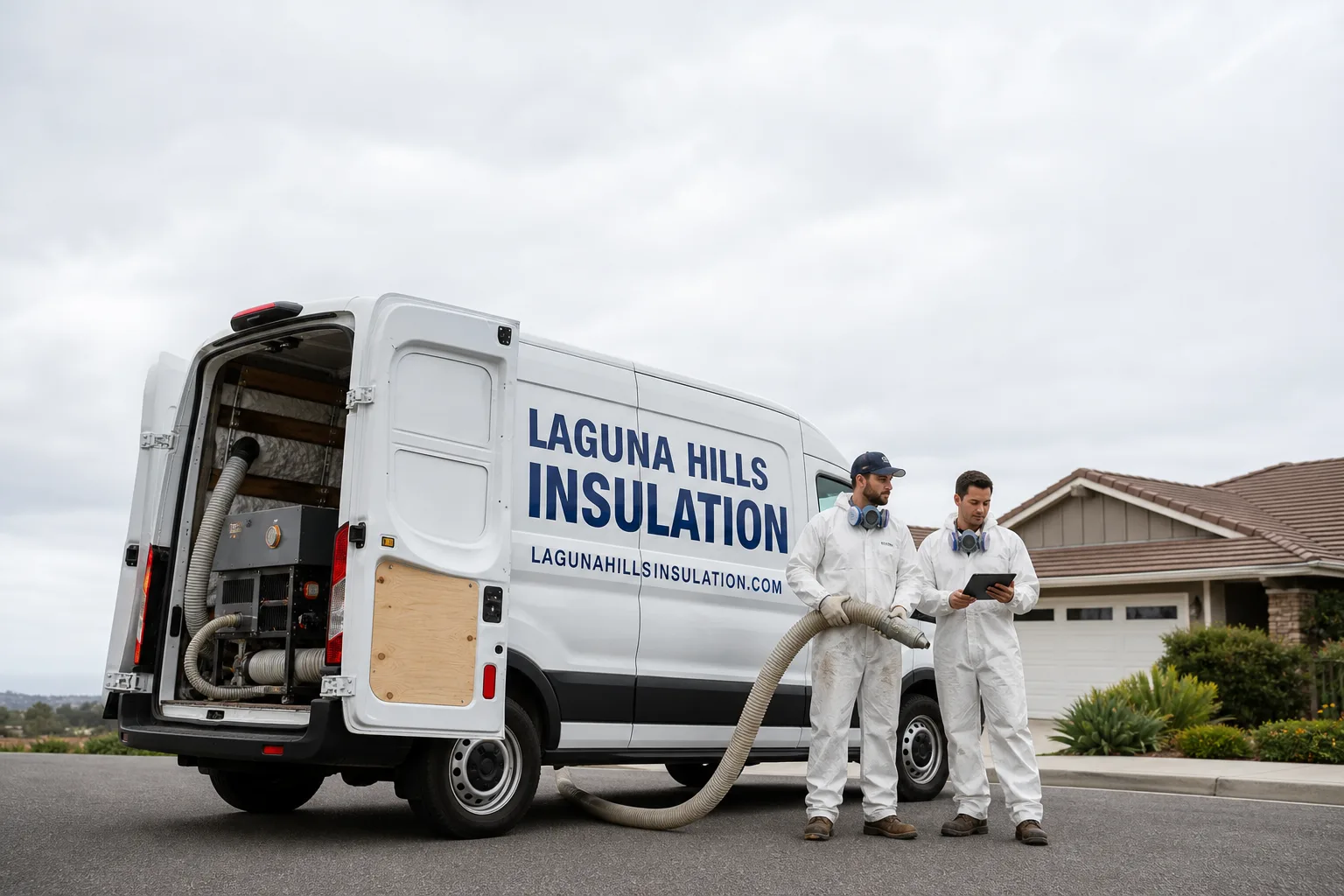
Fast, Reliable Attic Insulation Across Running Springs
Attic insulation in Running Springs usually costs between $1,800 and $4,200 for a full removal and reinstall on a typical 1,200-square-foot mountain cabin, while a basic top-up runs $900 to $1,600. Most jobs take one to two days, and we schedule Running Springs work within three to five business days of your call. At 6,000 feet, your attic is doing harder work than almost any attic in Southern California, holding heat against freezing winter nights and fighting solar gain through summer afternoons. If your cabin’s insulation is more than 20 years old, or if you’ve noticed ice dams at the roof edge or cold drafts near the ceiling, call us at (866) 393-6041 for a free inspection.
We know Running Springs. We know what snowpack does to eave vents. We know what decades of mountain moisture does to fiberglass batts. And we know that the right fix here isn’t always the one a low-elevation contractor would recommend. Our Attic Insulation team works up and down Highway 18 and the Keller Peak road regularly, so we’re not figuring out mountain conditions on your dime.
Why Laguna Hills Insulation Is Running Springs’s Preferred Attic Insulation Company
Most insulation companies stock one product line and sell it to every house they walk into. We don’t work that way. Eight manufacturer relationships, Owens Corning, Johns Manville, Knauf, Rockwool, CertainTeed, Icynene, Demilec, and GreenFiber, mean we choose the material that actually fits your cabin’s construction, not the material sitting in our warehouse. For a 1970s second home with open-beam ceilings and original wood siding, that’s often a different answer than for a newer build off Live Oak Drive.
Running Springs homeowners call us because we know what a snow-blocked gable vent does to an attic assembly, and we know that fire-resistant material selection matters year-round up here, not just in fire season. Garrett Lund runs our crews, and he’s built the company around a material-agnostic approach: we’ll tell you which product actually fits, even if it’s not the most expensive option. Response time to Running Springs runs three to five business days for scheduled work, and we stock common replacement materials locally so we’re not waiting on supply runs from down the hill.
Attic Insulation Removal in Running Springs
Attic insulation removal in Running Springs is a different job than it is in Orange County. Up here, the old insulation is often wet, compressed, and full of decades of mountain dust, rodent debris, and condensation damage from snow-blocked vents. Removal means vacuuming out the old material, addressing whatever caused the failure at the roof edge first, then cleaning and prepping the attic floor before new material goes in. If your attic has never been touched since the Carter administration, removal is usually the right call and it’s almost always cheaper than layering new insulation over a moisture problem. A full removal on a typical Running Springs cabin runs $1,200 to $2,800 depending on attic size and how much of the old material has wicked moisture.
When Removal Beats Adding More
If your existing batts are damp, moldy, or have shrunk away from the top plates, adding new insulation on top just seals the problem in. We see this constantly in Running Springs cabins that were insulated once in the 1980s and then ignored. The insulation isn’t just old, it’s been actively holding moisture against your roof decking, and that moisture is working its way into the framing. Pull it out, fix the venting at the eave, and start clean.
What We Find Under Old Insulation
Open can-light gaps, unsealed top plates, and wiring penetrations that have been leaking conditioned air for forty years. In Running Springs, that leaked air carries moisture, and at altitude that moisture condenses and freezes. We air-seal all of it before new material goes in, because sealing the ceiling plane does as much for your heating bill as the insulation itself.
Insulation Contractors in Running Springs
Insulation contractors in Running Springs should be able to look at a ridge-line cabin and immediately check the eave vents before they quote an R-value. That’s the test. Most low-elevation crews walk into an attic, measure square footage, and give you a number. We walk to the roof edge first, because in Running Springs, that’s where attic insulation failures start. Snowpack buries eave vents for weeks at a time, condensation builds, and insulation rots from the top down. If your contractor isn’t asking about ice dams and vent chutes, they don’t know this mountain. A full insulation contractor scope, removal plus air-sealing plus new material, typically runs $2,400 to $4,200 here depending on the attic footprint and what we find under the old material.
What We Look For Before Quoting
Eave vent clearance, gable vent function, top-plate sealing, can-light housings, and any sign that wildfire embers have entered the attic space through standard vents. We also check the roof decking for water staining, which tells us whether your insulation has been holding condensation against the wood. That stain pattern is the single best diagnostic for a Running Springs attic, and it tells us more than an R-value measurement ever will.
Mountain-Specific Installation Details
We install clear vent chutes at every eave bay so snow can’t pack directly against the insulation, and we check that the chute extends above typical snow depth. We also recommend ember-resistant venting on any Running Springs attic that still has standard mesh vents. It’s a small upgrade that addresses a fire risk most insulation contractors never mention.
Trusted Brands We Service in Running Springs
We stock and install Owens Corning, Johns Manville, Knauf, and GreenFiber products for Running Springs attics, and each one has a legitimate place up here. Owens Corning fiberglass batts handle the heavy thermal load at altitude and install cleanly in tight cabin attics. Knauf gives us an alternative fiberglass option when a specific R-value or density is specified. GreenFiber cellulose works well for dense-packing the hard-to-reach corners of an older mountain home, especially where framing is irregular and batts won’t seat properly. Because we carry multiple brands instead of one, we’re not forcing a square peg into your cabin’s odd-shaped attic. We can usually get Running Springs-specific material delivered and scheduled within the week.
Common Attic Insulation Problems We See in Running Springs Homes
- Snow-blocked eave vents causing top-down rot. When snow covers your eave vents for weeks, the attic stops breathing. Moisture from the living space rises, condenses on the underside of the roof deck, and saturates the insulation from above. By the time you notice a water stain on the ceiling, the batts have been wicking moisture for months.
- Patchwork retrofits from decades of half-measures. Most Running Springs cabins have had insulation added piecemeal over the years, some fiberglass here, some loose-fill there, a can of spray foam around one pipe. The top plates and can lights were never sealed, so mountain wind drives cold air straight through the gaps. The R-value on paper means nothing when the ceiling plane leaks like a screen door.
- Wildfire ember intrusion through standard attic vents. At 6,000 feet in the San Bernardino National Forest, ember intrusion is a year-round inspection point, not a seasonal concern. Standard mesh vents with quarter-inch openings let embers into the attic space, and once dry insulation ignites, the roof assembly goes fast. Low-elevation crews don’t think about this. We check it on every Running Springs job.
- Ice dams at the roof edge from heat loss through the ceiling. When attic insulation is missing or soaked, warm air escapes through the ceiling and melts snow on the roof. The meltwater runs to the cold eave, refreezes, and builds an ice dam. The dam backs water up under the shingles, and now you’ve got a roof leak plus a ruined insulation assembly. Fixing the insulation and air-sealing the ceiling plane solves the root cause.
Pricing for Attic Insulation in Running Springs, CA
Here are real numbers for the Running Springs market. A basic attic top-up runs $900 to $1,600 for a typical cabin. Full removal and reinstall with air-sealing runs $2,400 to $4,200 depending on attic size, access, and how much of the old material needs remediation. Dense-packing GreenFiber cellulose into an older, irregular attic space runs $1,800 to $3,200. Closed-cell spray foam from Icynene or Demilec, a common choice for open-beam ceilings where there’s no traditional attic floor, runs $3,500 to $6,000 for a typical Running Springs roof assembly. Fire-resistant material upgrades add 10 to 15 percent to material cost. We give free estimates, and we’ll tell you if a cheaper top-up will actually work for your cabin or if you’re wasting money layering over a moisture problem.
We Also Serve Cities Near Running Springs
Our crews work regularly in Lake Arrowhead, Highland, Mentone, and Crestline, so we’re familiar with the different microclimates and housing stock around the San Bernardino Mountains. If you’re searching for Attic Insulation in Running Springs, we’re already working in your area and can schedule your job with the same mountain-specific attention we bring to every cabin up here.
Serving Running Springs, CA — Our Local Coverage Area
We’re based in the Running Springs area and know this community well. Use the map below to see our service coverage — if you’re nearby, we can almost certainly help.
FAQs About Attic Insulation in Running Springs
Your insulation is wicking condensation, not roof water. Snow buries your eave vents for weeks, the attic stops breathing, and moisture from the living space condenses on the underside of the cold roof deck. That condensation soaks the insulation from the top down. The fix is clearing or adding eave vents, installing vent chutes above snow depth, and replacing the wet insulation. Call (866) 393-6041 and we’ll check the roof edge first, which is where the problem actually starts.
You can, but in a Running Springs cabin you’re usually sealing in the problem. If the old material has any moisture damage, or if top plates and can lights were never sealed, adding new insulation just buries the leaks and gives the condensation more material to soak. We’ll inspect and tell you honestly whether a top-up works or whether removal and air-sealing is the only fix that will actually pay for itself. The inspection is free.
Yes, and this is one of the biggest differences between mountain work and flatland work. At 6,000 feet in the San Bernardino National Forest, your attic is exposed to wildfire ember intrusion every time the wind picks up during fire season. Mineral wool insulation, like the Rockwool we install, is naturally fire-resistant and doesn’t ignite the way fiberglass facings or old cellulose can. Ember-resistant vents are also a smart upgrade. We recommend fire-resistant material on every Running Springs job unless the homeowner specifically declines it.
Ice dams form when heat leaks through your ceiling and melts snow on the upper roof, sending meltwater down to the cold eave where it refreezes. Good attic insulation plus proper air-sealing stops the heat leak at its source. In Running Springs, where snowpack sits on roofs for weeks, this is the single most common root cause of water damage we see. Fix the insulation and the ceiling plane, and the ice dams stop forming. Call (866) 393-6041 for an inspection.
Yes, we work through winter in Running Springs as long as roof access is safe. Steep open-beam cabins don’t have a traditional attic floor, so insulation usually means spray foam applied to the roof deck from below, which we can do regardless of snow on the roof. The key constraint is keeping the work area dry and warm enough for foam to cure properly, and we manage that with enclosed workspaces. If you’re getting condensation or ice forming on the inside of your open-beam ceiling right now, that’s a sign the roof assembly needs attention.
Call for a Free Running Springs Attic Inspection
Your attic is doing harder work up here than it would anywhere else in Southern California. Snow, wind, freeze-thaw cycles, and wildfire risk all put demands on your insulation that low-elevation homes never face. We’ll inspect the roof edge, check your venting, and give you an honest recommendation on material and scope, whether that’s a simple top-up or a full removal and reinstall with fire-resistant upgrades. Call (866) 393-6041 to schedule a free estimate in Running Springs.
Written by Garrett Lund, Owner at Laguna Hills Insulation, serving Running Springs and the San Bernardino Mountains with attic insulation, spray foam, and blown-in insulation.