
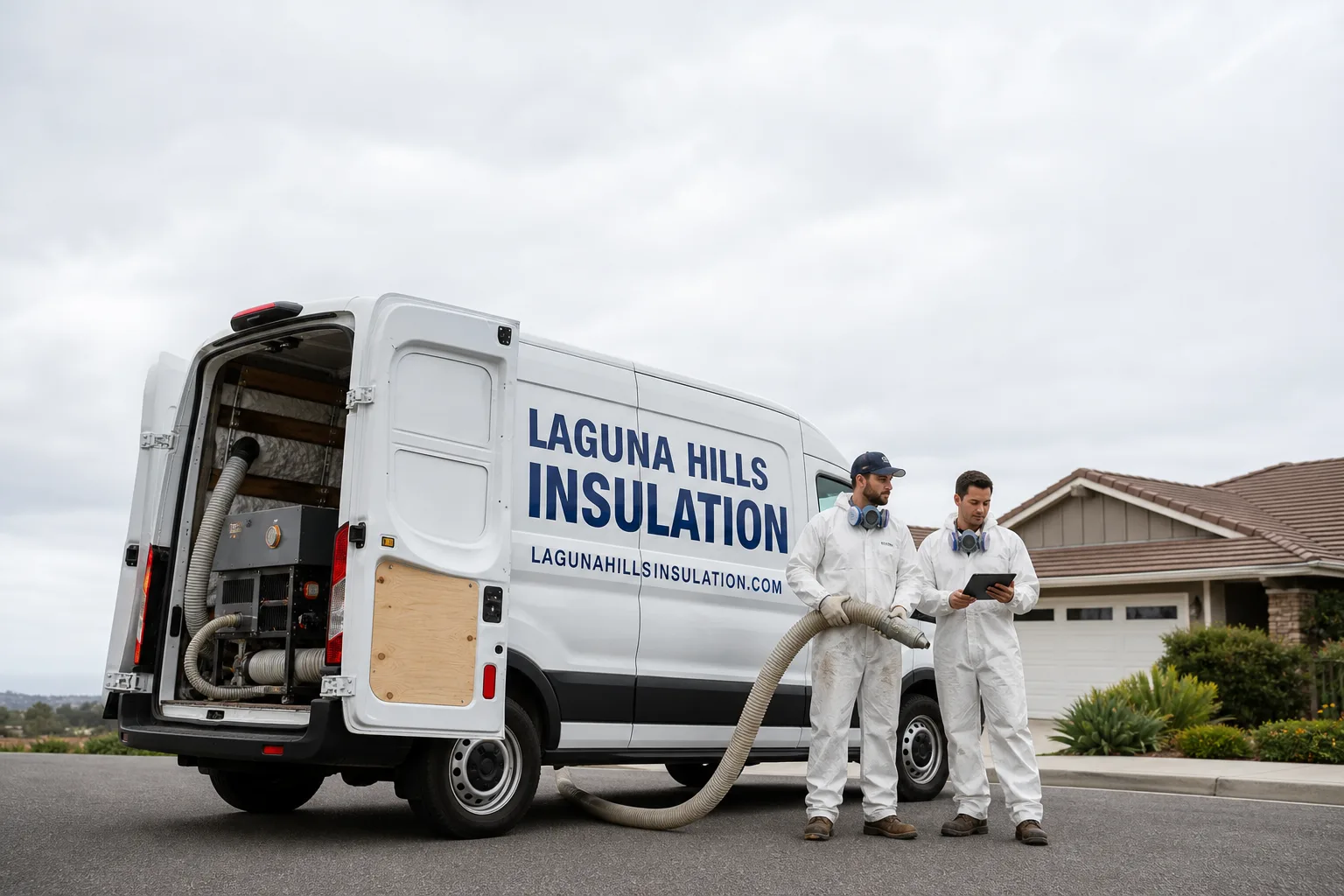
Fast, Reliable Attic Insulation Across Crestline
Attic insulation in Crestline isn’t the same job it is down the hill in San Bernardino. At 4,600 feet, your attic deals with freezing nights, snow sitting on the roof for days, and interior air that’s warm and humid by comparison. The combination creates condensation problems most Southern California insulation crews never see. Our Attic Insulation teams work in Crestline regularly, and we know what these older mountain cabins need: air-sealing before R-value, moisture management, and materials that perform in both the 90-degree summer spike and the 20-degree winter night. If your attic is sweating, drafty, or just never feels right, call (866) 393-6041 and we’ll take a look.
Why Laguna Hills Insulation Is Crestline’s Preferred Attic Insulation Company
Crestline homeowners call us because we show up with the right equipment for the terrain. The steep, winding roads around Lake Gregory and the tight driveways off Highway 138 mean we send smaller trucks and crews who don’t flinch at hand-carrying blown-in equipment through a low-clearance hatch. That’s not a sales pitch; it’s logistics, and it matters when your attic access is a 20-inch square cut into a hallway ceiling.
Garrett Lund runs our insulation program, and he’s built the company around a simple rule: tell the homeowner what the building needs, not what’s easiest to install. In Crestline, that often means saying “air-seal first, insulate second.” We’d rather explain why your vaulted ceiling is dripping than sell you an extra foot of fiberglass that won’t fix the root cause. Our Crestline customers tend to be people who’ve lived through enough mountain winters to know the difference between a real fix and a temporary patch. Those are the jobs we like best.
Attic Cleaning Services in Crestline
Attic Cleaning Services in Crestline usually start with a problem you’ve already noticed: dust blowing through ceiling fixtures, rodent activity in the eaves, or old insulation that’s compressed and gray. On a mountain cabin, cleaning often doubles as inspection. We’re looking for signs of moisture that tell us something bigger is going on: condensation stains on sheathing, rusted nail heads poking through, or squirrel damage around the gable vents. A typical attic cleaning in Crestline runs $400 to $900 depending on square footage, access difficulty, and how much debris has accumulated. If there’s mold, the scope changes and we’ll walk you through it before any work begins.
When Cleaning Turns into Air-Seal Prep
Most Crestline attics we clean haven’t been opened in years, if not decades. Once we remove the old material and debris, the top plates and penetrations are visible for the first time. That’s when we recommend sealing before any new insulation goes in. It’s the one step that prevents the wet-sheathing problem we see on so many mountain roofs.
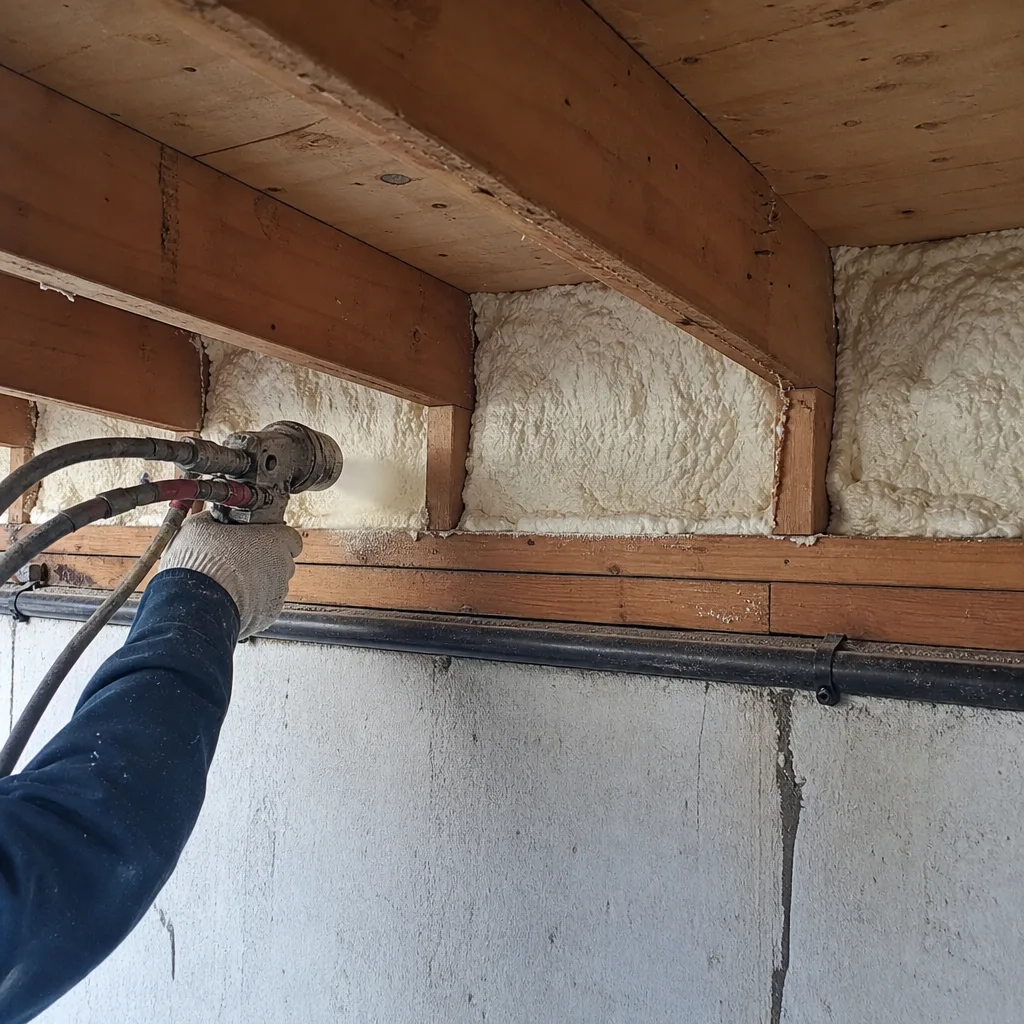
Low-Clearance Access Work
We’ve cleaned attics in Crestline where the hatch is in a closet ceiling and the pitch won’t let a full-height person stand near the eaves. Our crews work those spaces by hand, bagging old insulation in small increments rather than running a vacuum hose that might tear the fragile lath-and-plaster below. It takes longer, but it’s the only way to do it without damaging the ceiling.
What happens when you call
- 1
A real person answersNo phone trees — you reach a local pro.
- 2
You get an upfront price rangeHonest numbers before anyone is dispatched.
- 3
A background-checked tech heads outLicensed & insured, dispatched right away.
- 4
You approve before work beginsNothing starts until you say go.
Attic Mold Removal in Crestline
Attic Mold Removal in Crestline is almost always tied to a ventilation or air-sealing problem. The mold you see on the sheathing isn’t the cause; it’s a symptom. Warm air leaks up through unsealed top plates, hits a cold roof deck at night, and condensation forms. Repeat that cycle forty nights a winter and you get the dark staining homeowners call us about. Mold removal in a Crestline attic typically runs $800 to $2,200, with the upper end reserved for larger attics, vaulted sections, or cases where the sheathing needs remediation before we can safely add insulation.
Air-Sealing Before Remediation
If we remove mold without fixing the air leak that fed it, the mold returns. So our process always includes sealing the bypasses: around plumbing vents, wiring penetrations, and along the top plates where the walls meet the attic. On the older cabins throughout Crestline, these gaps are often open enough to see daylight through.
Ventilation Adjustments
Sometimes the fix is as simple as clearing blocked soffit vents or adding a ridge vent so the attic can dry out after snowmelt. A mountain attic has to breathe, especially in a house that predates modern building codes. We check the existing ventilation before recommending any mold treatment or new insulation.
Trusted Brands We Service in Crestline
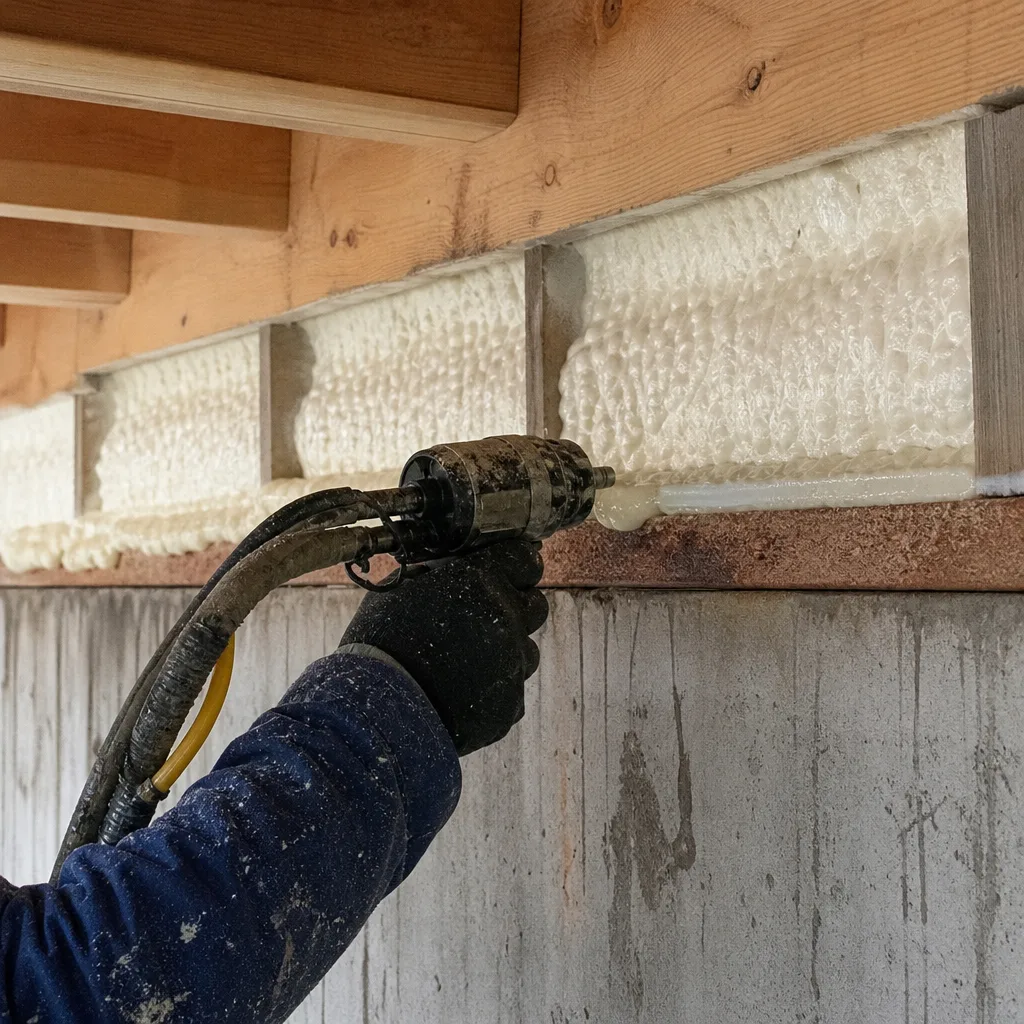
We stock and install materials from Owens Corning, Johns Manville, GreenFiber, and Demilec, among others. For Crestline’s colder conditions, we tend to reach for GreenFiber’s dense-pack cellulose in tight vaulted bays and Owens Corning fiberglass in the flat attic sections. Demilec’s closed-cell spray foam earns its keep wherever air-sealing and insulation need to happen in one pass, like a vaulted ceiling with no vent channel. Having multiple brands on hand means we’re not trying to sell you the one material sitting in our yard; we’re matching the product to what your cabin actually needs.
Common Attic Insulation Problems We See in Crestline Homes
- Damp sheathing from winter condensation: Warm interior air leaks past unsealed top plates into a cold attic, and the moisture condenses on the underside of the roof deck. You see frost or dark staining along the ridge, and it has nothing to do with a roof leak.
- Compressed or missing insulation near the eaves: In many older Crestline cabins, the only insulation is whatever batt fit between the ceiling joists forty years ago. The outer edges are almost always bare because nobody could reach them through the low-clearance hatch.
- Blocked or undersized ventilation: Snowmelt and rain need somewhere to dry out. When the soffit vents are painted over or the ridge has no vent at all, new insulation gets wet from above and loses its R-value within a season or two.
- Vaulted ceilings with no air-sealing: These are the hardest spaces to insulate well. The pitch doesn’t hold loose fill, fiberglass batts sag, and the first cold snap brings drips along the beam edges. We use dense-pack cellulose or closed-cell foam depending on the framing.
Pricing for Attic Insulation in Crestline, CA
For a typical 1,200-square-foot Crestline cabin, attic insulation runs $1,800 to $4,500 depending on the method and material. Blown-in fiberglass or cellulose across a flat attic floor lands near the lower end at $1,500 to $2,800 including basic air-sealing. Adding a top-up over existing insulation starts around $800 to $1,400. Vaulted ceilings with dense-pack cellulose or closed-cell spray foam are the bigger investment, typically $3,500 to $7,500, because they demand more labor and a material that won’t sag or settle. Every quote includes a full attic inspection. Call (866) 393-6041 and we’ll give you exact numbers for your roofline.
We Also Serve Cities Near Crestline
Our Crestline work keeps us along the 18 and 138 corridors, so we also insulate attics in Lake Arrowhead, Muscoy, San Bernardino, and Highland. If you’re just down the mountain or on the next ridge over, the same crew and the same equipment can reach you.
Serving Crestline, CA — Our Local Coverage Area
We’re based in the Crestline area and know this community well. Use the map below to see our service coverage — if you’re nearby, we can almost certainly help.
FAQs About Attic Insulation in Crestline
Because warm indoor air leaks into a cold attic and condenses on the underside of the roof deck. At Crestline’s 4,600-foot elevation, overnight temperatures drop low enough that the sheathing acts like a cold glass on a humid day. The fix is air-sealing the top plates and penetrations before adding or replacing insulation. Call (866) 393-6041 and we’ll find the leaks.
Yes. We hand-carry the hoses and equipment through hatches as small as 20 by 30 inches, and our crews work on their knees in the tight bays. It’s slower than a wide-open Southern California tract-house attic, but it’s the only way to get full edge coverage in an older Crestline cabin. We quote the job based on access, so you know the real number up front.
Always. A vaulted ceiling with unsealed penetrations will condense and drip, no matter how much insulation you add. We seal the top plates, can lights, and rafter bays first, then dense-pack cellulose or apply closed-cell spray foam depending on the framing and roof condition. Skipping the seal step is how you end up with mold on new work.
Don’t disturb it and don’t cover it with new insulation. The moisture source needs to be identified and corrected first. We inspect the air-sealing, the ventilation, and any signs of roof or flashing leaks, then recommend a remediation approach. In Crestline, mold on sheathing is almost always condensation-driven, not leak-driven, so the fix usually starts in the conditioned space below.
It changes the details more than the depth. The Department of Energy’s recommended R-value for mountain zones like Crestline is R-49 to R-60 in the attic floor, but the more important variable up here is air-sealing and vapor control. A well-sealed R-38 attic outperforms an unsealed R-60 every winter. We spec based on what your specific ceiling assembly can hold and what’s happening at the roofline. Call (866) 393-6041 for a free estimate.
Written by Garrett Lund, Owner at Laguna Hills Insulation, serving Crestline’s mountain homes and cabins with attic insulation, air-sealing, and moisture remediation.