
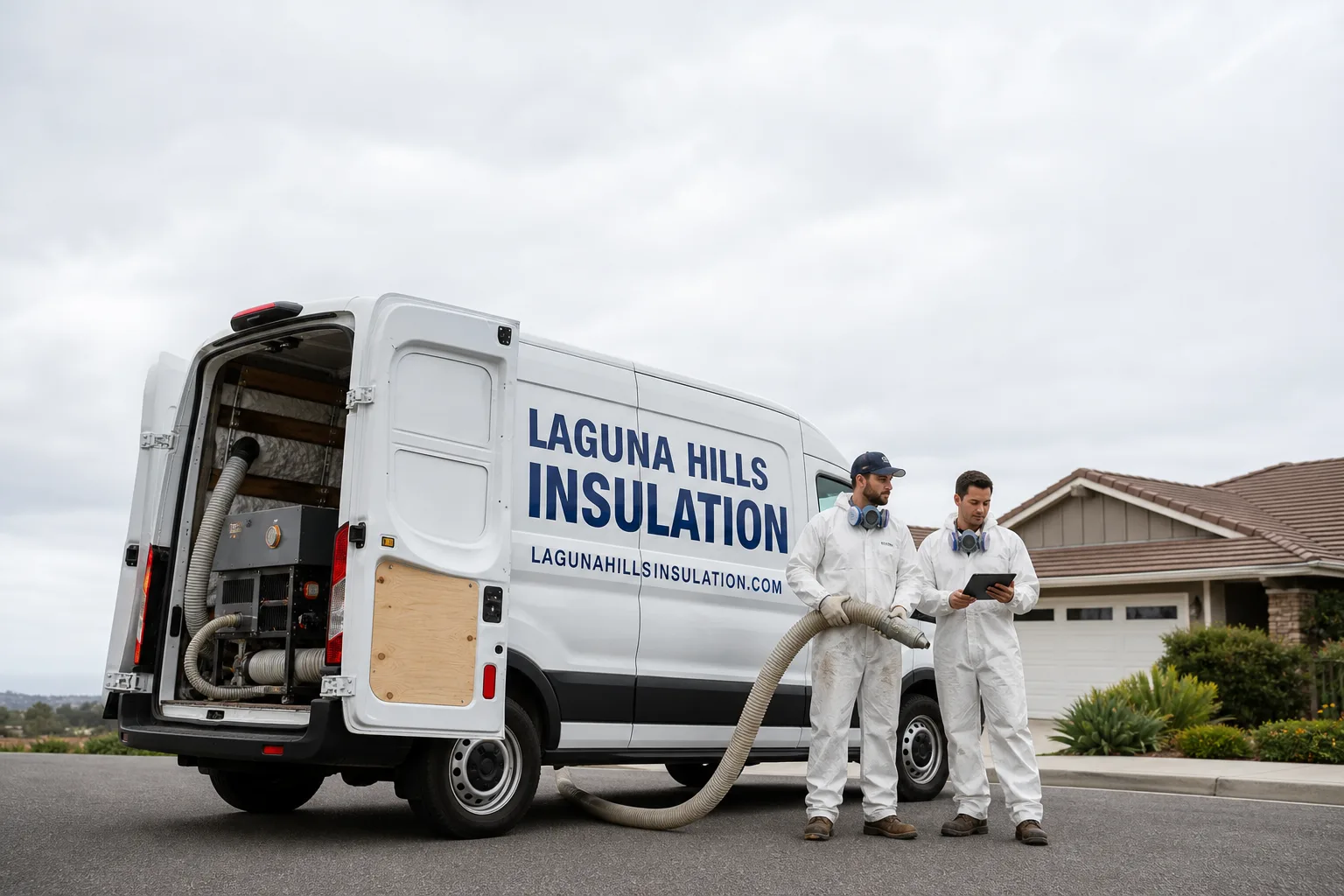
Fast, Reliable Spray Foam Insulation Across South Gate
Spray foam insulation in South Gate homes typically runs $2.50 – $7.00 per board foot installed, with a standard attic kneewall project landing between $1,800 and $4,200 depending on square footage and whether you’re using open-cell or closed-cell product. Most South Gate jobs wrap up in one day. We work throughout 90280, from the Firestone corridor to the Tweedy Mile and the residential blocks off Long Beach Boulevard, and when you call (866) 393-6041 we’ll give you a straight answer on what your house actually needs before we ever talk numbers.
South Gate’s housing stock has a rhythm to it. Block after block of 1940s and 1950s stucco tract homes, nearly identical in layout, almost all of them under-insulated by modern standards. We know these houses because we’ve crawled through enough South Gate attics to recognize the same problems repeating themselves: scorching low-slope roofs, original lath-and-plaster walls with zero air sealing, and garage-door hardware quietly rusting from marine-layer salt air. You don’t need a generic insulation pitch. You need someone who knows why your specific house fights you in August and drafts on you in January.
Why Laguna Hills Insulation Is South Gate’s Preferred Spray Foam Insulation Company
Garrett Lund built this company around a simple trade rule: carry every legitimate material option, then let the house tell you which one fits. We’re not a single-product contractor. We install attic insulation, spray foam insulation, and blown-in insulation, and we stock product from Demilec, Owens Corning, and Johns Manville among others. That means when a South Gate homeowner asks whether open-cell or closed-cell foam is right for their unvented attic, we answer based on performance, not on what’s sitting in the warehouse.
South Gate’s post-war stucco and wood-frame homes reward a detail-obsessed installer. The wall cavities in these 1950s tract houses are shallow. The roof decks are low-slope and hot. The salt air off the coast, mild as it is, attacks exposed fasteners and garage-door chains faster than anyone expects. When our crews drive up from the Laguna Hills area into South Gate, they’re expecting those conditions. They’re not learning your attic’s quirks for the first time on your dime.
The other thing South Gate homeowners tell us they appreciate: we’ll tell you when spray foam isn’t the right call. On a home with decent fiberglass batts and the real problem being air leakage around old window frames, spraying foam everywhere is a waste of money. We’d rather tell you that than sell you something you don’t need. That’s how you earn trust on the Firestone corridor, and it’s why our South Gate customers recommend us to neighbors on the Tweedy Mile and over in Walnut Park.
Spray Foam Attic Insulation in South Gate
Spray foam attic insulation in South Gate homes is the single highest-impact retrofit for this city’s low-slope, post-war roof decks, because those attics routinely hit 140°F to 150°F on inland heat spikes and radiate that heat straight through uninsulated ceilings into bedrooms below. Closed-cell foam from Demilec applied to the roof deck creates an air barrier and a thermal barrier in one shot, dropping attic temperatures dramatically and cutting the radiant load that makes upstairs rooms unbearable in July and August. Typical South Gate attic foam projects run $2,000 – $6,000 depending on roofline area, access, and whether we’re also sealing kneewalls.
Radiant Heat Blocking on Low-Slope Roofs
South Gate’s original tract homes were built with barely-there attic ventilation and no radiant barrier. The afternoon sun pounds directly onto those low-slope roof planes, and the heat transfers through the roof decking into whatever sits below. Closed-cell spray foam stops that transfer at the source because it adheres directly to the decking and blocks the thermal bridging that lets heat sneak through framing members. We see attics in South Gate drop 30 – 40°F after foam installation, which means the rooms below finally stop fighting the afternoon bake.
Kneewall Sealing for Post-War Tract Layouts
The 1940s and 1950s floor plans along streets off Firestone and Tweedy often have bedroom kneewalls that face the attic. Original builders left those kneewalls uninsulated, so every afternoon they act like radiators, heating the bedroom on the other side. We spray closed-cell foam directly onto the attic side of those kneewalls, creating a monolithic air seal and insulating layer that shuts down the radiant transfer. It’s one of the most cost-effective attic fixes for South Gate’s housing stock, typically $900 – $2,200 for a full kneewall treatment.
Spray Foam Wall Insulation in South Gate
Spray foam wall insulation in South Gate addresses a problem that fiberglass batts simply can’t solve in this housing stock: the original lath-and-plaster and early drywall walls with no air sealing and minimal thermal resistance. Open-cell foam injected into enclosed wall cavities fills irregular old framing and stops the air movement that makes uninsulated walls feel drafty on cool nights and hot on sunny afternoons. Wall cavity foam in South Gate generally runs $1.50 – $4.00 per square foot of wall area, with most single-story tract homes landing between $3,000 and $8,000 depending on how much of the perimeter needs treatment.
Air Sealing for Marine-Layer Drafts
South Gate sits close enough to the coast that the marine layer rolls in most evenings, and with it comes damp, cool air that finds every gap in an old wall assembly. Open-cell spray foam acts as an air seal first and an insulator second, filling the voids around old electrical boxes, plumbing penetrations, and the gaps where original sheathing has shrunk over 70 years. That’s the difference between a house that holds heat and one that leaks it through a dozen invisible cracks.
Substrate Prep on Original Plaster
This is where South Gate’s housing age matters. Foam needs a clean, stable substrate to bond properly, and original lath-and-plaster has decades of dust, old paint, and sometimes moisture intrusion working against adhesion. We don’t skip prep on these walls. We inspect the substrate, address any moisture issues, and only then apply foam. Skipping that step is exactly why some spray foam jobs in older Southeast LA homes pull away from the wall within a few years, and we’d rather do it right the first time than come back and fix a delamination somebody else caused.
Trusted Brands We Service in South Gate
We install and service spray foam from Demilec and Owens Corning, and we stock the open-cell and closed-cell product lines South Gate homeowners ask for most. Demilec’s closed-cell foam is a workhorse in this climate because it resists the moisture that marine-layer air pushes into unvented attics, and it delivers the R-value per inch that matters when roof cavities are shallow. Owens Corning foam products round out our options for projects where open-cell air sealing makes more sense. Because we carry multiple brands rather than pushing a single line, the recommendation you get in South Gate is based on what your attic and walls actually need.
Common Spray Foam Insulation Problems We See in South Gate Homes
- Open-cell foam absorbing marine-layer moisture. In unvented attics near the Firestone corridor, open-cell foam can soak up damp air overnight and lose R-value during the next day’s heat cycle. We spec closed-cell for unvented South Gate roof decks whenever possible because it doesn’t absorb moisture the same way.
- Foam delaminating from original lath-and-plaster walls. Stucco walls sweat through thermal cycling, and if the substrate wasn’t prepped properly before spraying, the foam pulls away and leaves draft paths behind. We inspect and prep every wall surface before foam goes on, which is the step budget installers often skip.
- Foam shrinking near garage-door framing and vent penetrations. Salt air corrodes the fasteners around these openings first, and once a fastener fails, the foam around it can pull back and open a leak. On a 1953 stucco tract house near Firestone Boulevard, our crew found the original attic knee walls uninsulated and radiating afternoon heat into a bedroom, while the garage-door hinges and opener chain were already rusted from years of marine air. We sprayed Icynene closed-cell foam across the kneewall and roof deck to block radiant gain, then sealed around the garage-door framing with stainless fasteners so the same salt air wouldn’t chew the hardware again.
- Inconsistent coverage in shallow rafters. South Gate’s low-slope roofs leave tight spaces where installers applying foam too quickly leave thin spots. Thin foam means thermal bridging through the rafters and a room that never quite cools down. We work those tight cavities carefully and verify coverage before we call a job done.
Pricing for Spray Foam Insulation in South Gate, CA
We Also Serve Cities Near South Gate
Our crews work throughout Southeast LA County, and we regularly run jobs in Lynwood, Huntington Park, Walnut Park, and Bell alongside our South Gate work. If you’re a homeowner in any of these neighboring cities, our Spray Foam Insulation team can assess your attic and walls with the same material-agnostic approach we use across the region. For more about how we serve the South Gate community specifically, take a look at our South Gate coverage page.
Serving South Gate, CA — Our Local Coverage Area
We’re based in the South Gate area and know this community well. Use the map below to see our service coverage — if you’re nearby, we can almost certainly help.
FAQs About Spray Foam Insulation in South Gate
Why does spray foam insulation on South Gate stucco walls sometimes pull away within a few years?
Spray foam pulls away from South Gate stucco walls because the substrate wasn’t prepped before application, and the thermal cycling of hot days and cool marine-layer nights causes moisture in the wall assembly to weaken the bond. We inspect and prepare every wall surface before spraying, and we use closed-cell foam on problematic substrates because it bonds more aggressively and resists moisture better than open-cell. If you have a previous foam job that’s delaminating, call (866) 393-6041 and we’ll tell you whether it can be spot-repaired or needs to be redone properly.
Does spray foam insulation help with the garage-door hardware corrosion we see on Firestone-area homes?
No, spray foam doesn’t stop garage-door hardware corrosion, but it does seal the air paths around garage-door framing where that corrosion opens draft holes back into the house. The salt air that rusts opener chains and hinges also attacks the fasteners around garage doors, and once those fasteners fail, foam can pull back and leak. We spec stainless fasteners around garage-door framing and seal those penetrations with foam at the same time, so the air barrier stays intact even as the hardware weathers. For an assessment of your garage ceiling and adjoining wall, call us at (866) 393-6041.
Can spray foam fix the scorching attic temps in South Gate’s low-slope roofs?
Yes, spray foam applied to the underside of the roof deck drops South Gate attic temperatures dramatically, often 30 – 40°F, by stopping radiant heat transfer at the source. Closed-cell foam from Demilec creates both an air barrier and a thermal barrier, which is the right combination for low-slope roofs that bake in the inland heat. The rooms below stop fighting the afternoon sun, and your cooling system doesn’t have to work as hard.
What’s the right spray foam for an unvented attic in South Gate’s climate?
Closed-cell spray foam is the right product for an unvented attic in South Gate because the marine layer pushes damp air into those spaces at night, and closed-cell foam resists absorbing that moisture. Open-cell foam in an unvented attic can soak up humidity, lose R-value, and create the conditions for musty air inside the attic assembly. If your attic is unvented and you’re considering foam, call (866) 393-6041 and we’ll evaluate whether you need a vented retrofit or a straight closed-cell application on the roof deck.
How long does spray foam last in South Gate’s salt-air environment?
Closed-cell spray foam properly installed in South Gate homes lasts 30 years or more, and the foam itself is not the weak point in a salt-air environment. The fasteners and hardware around penetrations are what fail first, which is why we use stainless fasteners and corrosion-resistant detailing around garage doors, vents, and kneewall connections. The foam stays intact as long as the substrate it’s bonded to remains stable and the fasteners holding the surrounding assembly don’t corrode away.
Get Your South Gate Spray Foam Quote
If your South Gate attic bakes in the afternoon or your stucco walls leak air on every cool night, call us at (866) 393-6041 for a free estimate. We’ll come out, look at your roof deck, kneewalls, and wall cavities, and tell you exactly which foam product fits, what it’ll cost, and what we’d recommend if foam isn’t the answer. No single-product pitch. Just straight answers from an insulation contractor who knows South Gate’s post-war housing stock.
Written by Garrett Lund, Owner at Laguna Hills Insulation, serving South Gate and Southeast LA County since the company’s founding.