
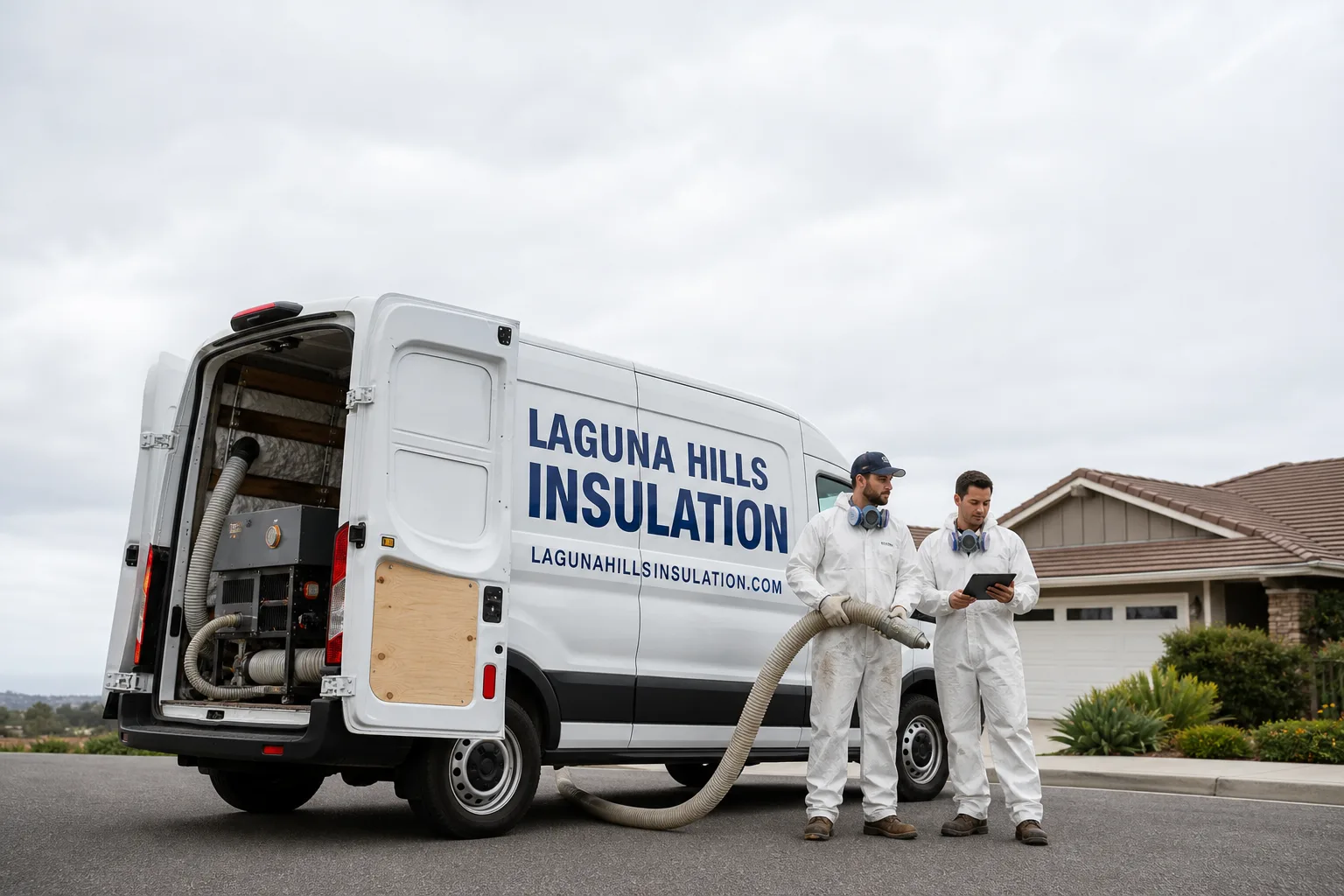
Fast, Reliable Spray Foam Insulation Across Lake Arrowhead
Spray foam insulation in Lake Arrowhead runs $2,600 to $7,800 for a typical cabin floor-and-wall retrofit, with open-cell foam on the lower end and closed-cell on the higher end. We get calls from homeowners off North Bay Road, Grass Valley Road, and throughout the 92352 zip code who are tired of frozen pipes and cold floors in cabins built decades before insulation codes existed. Our crews work in Lake Arrowhead weekly, and we schedule around mountain weather so foam cures properly the first time. Call (866) 393-6041 and we’ll give you a straight answer about what your cabin actually needs.
Key takeaways for Lake Arrowhead homeowners:
- At 5,100 feet, cold-weather application matters more than anything else – heated equipment and winter-grade formulations are non-negotiable.
- In 1920s-1970s cabins, the floor over a pier-and-beam crawl space is usually the first place to spray, not the attic.
- Closed-cell foam from Icynene or Demilec doubles as a vapor barrier, which matters in a climate where snow sits on roofs for weeks.
- We service Lake Arrowhead, Crestline, Running Springs, Highland, and Muscoy with the same crew, so you’re not waiting on a sub.
Why Laguna Hills Insulation Is Lake Arrowhead’s Preferred Spray Foam Insulation Company
Mountain work exposes sloppy contractors fast. We’ve fixed a lot of failed foam in Lake Arrowhead – sticky, uncured open-cell sprayed in an unheated crawl space during a February cold snap, rim joists skipped so wind-driven cold pours through, foam applied over knob-and-tube wiring that should have been addressed first. Garrett Lund built this company around knowing the material science behind every product we install, so when we tell a Lake Arrowhead homeowner why closed-cell beats open-cell under a floor deck, we’re speaking from field experience, not a sales script.
Homeowners around the lake call us because we understand what a 1960s Gambrel cabin off Zurich Drive actually needs. That means checking what’s already there – compressed batts, single-pane windows, open crawl vents – before recommending anything. We stock products from eight manufacturers including Icynene, Demilec, and GreenFiber, which means the recommendation fits the house, not our inventory. Our Spray Foam Insulation team has applied foam in unheated crawl spaces, vaulted A-frame ceilings, and narrow attic knee walls across the San Bernardino Mountains. We know which formulations work at 5,100 feet and which ones fail.
Open Cell Spray Foam in Lake Arrowhead
Open-cell spray foam in Lake Arrowhead costs $1.10 to $2.00 per board foot installed, and it’s the right call for attic roof decks and interior wall cavities where you want air sealing without the added cost of closed-cell. The half-pound foam expands to fill irregular framing – common in cabins that were stick-built by hand decades ago – and it cuts air infiltration dramatically. For a 1,200-square-foot cabin attic, a Lake Arrowhead homeowner can expect to pay $2,800 to $5,400 depending on rafter depth and access.
Where Open-Cell Fits a Mountain Cabin
Open-cell is a good match for attic rooflines where you’re insulating the ceiling from inside the conditioned space. In Lake Arrowhead’s older cabins, rafters are often 2×6 or even 2×4, so cavity depth limits how much R-value you can hit with batts. Spraying open-cell directly against the roof deck fills those shallow bays and creates an air seal that batts simply can’t match. We use open-cell on upper walls and ceiling planes but steer clear of it below grade or in crawl spaces, where mountain moisture becomes an issue.
Cold-Weather Curing Matters Up Here
Open-cell foam needs substrate temperatures above about 40°F to cure properly. In Lake Arrowhead, that means we schedule open-cell work for daytime windows in fall and spring, or we bring heated enclosures for winter jobs. A contractor who sprays open-cell at 25°F in an unheated crawl space is going to leave you with sticky foam that never sets. We don’t do that, and we’ll tell you honestly if a January install needs to wait for a warm stretch.
Spray Foam Insulation Contractors in Lake Arrowhead
Spray foam insulation contractors working in Lake Arrowhead need to understand mountain construction, not just foam chemistry. The job here usually involves working in tight crawl spaces, around pier-and-beam foundations, and in cabins with no attic access to speak of. Closed-cell spray foam from Icynene or Demilec runs $2.20 to $3.80 per board foot in Lake Arrowhead, and for floor-system work in a typical cabin, you’re looking at $3,200 to $7,800 depending on square footage and access. We’re one of the few crews serving Lake Arrowhead that brings both open-cell and closed-cell rigs to every job, so the material decision happens after we see the house, not before.
Floor-First Retrofits for Pier-and-Beam Cabins
In Lake Arrowhead, many homes sit on pier-and-beam foundations with open crawl spaces underneath. That’s a direct path for 20°F night air to rob heat from the floors all winter. We typically seal and spray the rim joists first, then apply closed-cell foam under the floor deck between joists. This creates an air barrier and a thermal break in one pass, and it’s the single biggest comfort upgrade most cabin owners can make. R-value per inch for closed-cell is around R-6.5 to R-7, which matters when you’re working with 2×8 or 2×10 joist bays.
Wall Cavities in Pre-1970s Cabins
Original wall insulation in Lake Arrowhead cabins is often a joke – if it exists at all. We open wall cavities and remove compressed, mouse-damaged fiberglass, then spray open-cell foam to fill the stud bays completely. The air-sealing benefit is what changes the feel of the house. It stops the drafts that make a cabin feel 10 degrees colder than the thermostat says. Before any wall work, we check for knob-and-tube wiring, because spraying foam over live, unsealed electrical is a fire hazard no responsible contractor should ignore.
Trusted Brands We Service in Lake Arrowhead
We install Icynene and Demilec spray foam systems, and we also carry Owens Corning and GreenFiber when the job calls for more than foam. Having multiple product lines matters in Lake Arrowhead because a single-brand contractor will sell you what they stock, whether or not it’s the right material for a pier-and-beam cabin floor or an A-frame roof deck. Closed-cell from Icynene is our go-to for below-floor and rim-joist work in the mountains – it handles moisture and gives you structural rigidity. Demilec’s closed-cell line performs similarly, and we’ll spec whichever is available with the right cure profile for the season. For homeowners who want a lower-cost air seal in walls and attics, GreenFiber cellulose combined with foam in targeted areas is a practical option we’re glad to discuss.
Common Spray Foam Insulation Problems We See in Lake Arrowhead Homes
- Uncured open-cell foam in crawl spaces. Foam sprayed on a sub-freezing night won’t cure – it stays tacky and useless. At 5,100 feet, this is the single most common failure we see from valley contractors who don’t adjust for mountain conditions.
- Skipped rim joists on pier-and-beam foundations. The floor deck gets sprayed but the perimeter stays open, so wind-driven cold pours in around the edges. The entire floor perimeter has to be sealed before any foam goes between joists.
- Foam over knob-and-tube wiring. Many 1920s-1960s cabins still have live knob-and-tube in the walls. Spraying foam directly over it hides a known fire hazard and makes future electrical work a nightmare. The wiring gets assessed first.
- Moisture trapped at the roof deck. Snow sitting on a roof for weeks creates meltwater that can back up under shingles. If spray foam is applied to the underside of a roof deck without proper ventilation planning, you can trap moisture in the sheathing and rot the roof from the inside out.
Pricing for Spray Foam Insulation in Lake Arrowhead, CA
Here’s what Lake Arrowhead homeowners can expect for spray foam work in 2025. Open-cell wall and attic jobs range from $2,800 to $5,400 for a typical cabin. Closed-cell floor-system retrofits run $3,200 to $7,800, with larger homes over 2,500 square feet pushing toward $9,000. Per-board-foot pricing: open-cell at $1.10 to $2.00, closed-cell at $2.20 to $3.80. Access is the wildcard – crawl spaces under 1960s cabins with 18 inches of clearance cost more in labor than a walkable attic. Cold-weather scheduling can also add a premium, since we bring heated equipment for winter installs. Call (866) 393-6041 for a free estimate specific to your cabin’s footprint and foundation type.
We Also Serve Cities Near Lake Arrowhead
Our crews work throughout the San Bernardino Mountains. If you’re in Crestline, Running Springs, Highland, or Muscoy, you get the same crew and the same straight answers. Lake Arrowhead is home base for our mountain work, but we’re on the hill every week and we route jobs to keep response times short across the whole ridge.
Serving Lake Arrowhead, CA — Our Local Coverage Area
We’re based in the Lake Arrowhead area and know this community well. Use the map below to see our service coverage — if you’re nearby, we can almost certainly help.
FAQs About Spray Foam Insulation in Lake Arrowhead
Yes, but only with heated equipment and winter-grade formulations. Closed-cell foam can be applied down to about 20°F substrate temperature if the chemical drums and hoses are heated properly. Open-cell needs warmer conditions – usually above 40°F – so we schedule open-cell work for daytime windows or spring and fall. A contractor who sprays open-cell on a 25°F night is going to leave uncured foam behind. Call (866) 393-6041 to talk about the right window for your cabin.
Because most cabins around the lake sit on pier-and-beam foundations with open crawl spaces, and cold mountain air pours through the floor system all winter. The floor is the largest uninsulated surface in a typical 1950s cabin, and it’s where you feel the cold first. We seal and spray the rim joists, then apply closed-cell foam under the floor deck. Homeowners report warmer floors immediately and frozen-pipe incidents drop to zero after the floor is sealed. For an exact price on your crawl space, call (866) 393-6041.
Spray foam at the roof deck can reduce ice dam formation by keeping heat from escaping through the attic and melting snow unevenly. But it’s not a standalone fix – you need proper ventilation above the foam and, in older cabins, often a full air-sealing pass first. Closed-cell foam against the sheathing stops warm interior air from reaching the snow load. Snow that melts evenly and drains off doesn’t back up under shingles. We’ll tell you if your roof needs ventilation work before foam goes in. Get an honest assessment at (866) 393-6041.
The first thing is wiring. Many of these cabins have knob-and-tube or old cloth-jacketed electrical that has to be inspected before foam touches the wall cavities. The second is access – you can’t spray what you can’t reach, and some of these old cabins have wall cavities you can only get to by cutting access holes. The third is that original insulation, if any, is usually compressed batts that have to be removed before spraying. We handle all of it, but it means the job takes longer and costs more than a new-construction spray. For a retro fit quote on your specific cabin, call (866) 393-6041.
For crawl spaces, rim joists, and below-floor work in Lake Arrowhead, closed-cell is the right call – it handles moisture, adds structural strength, and gives you a vapor barrier in one pass. For attic roof decks and interior wall cavities, open-cell is usually sufficient and costs about half as much per board foot. A 1950s A-frame off Zurich Drive got closed-cell under the floor and open-cell in the walls, which is a typical split for this area. The answer depends on where the foam is going, and we’ll walk you through it. Call (866) 393-6041 to get specific.
Written by Garrett Lund, Owner at Laguna Hills Insulation, serving Lake Arrowhead and the San Bernardino Mountains.