
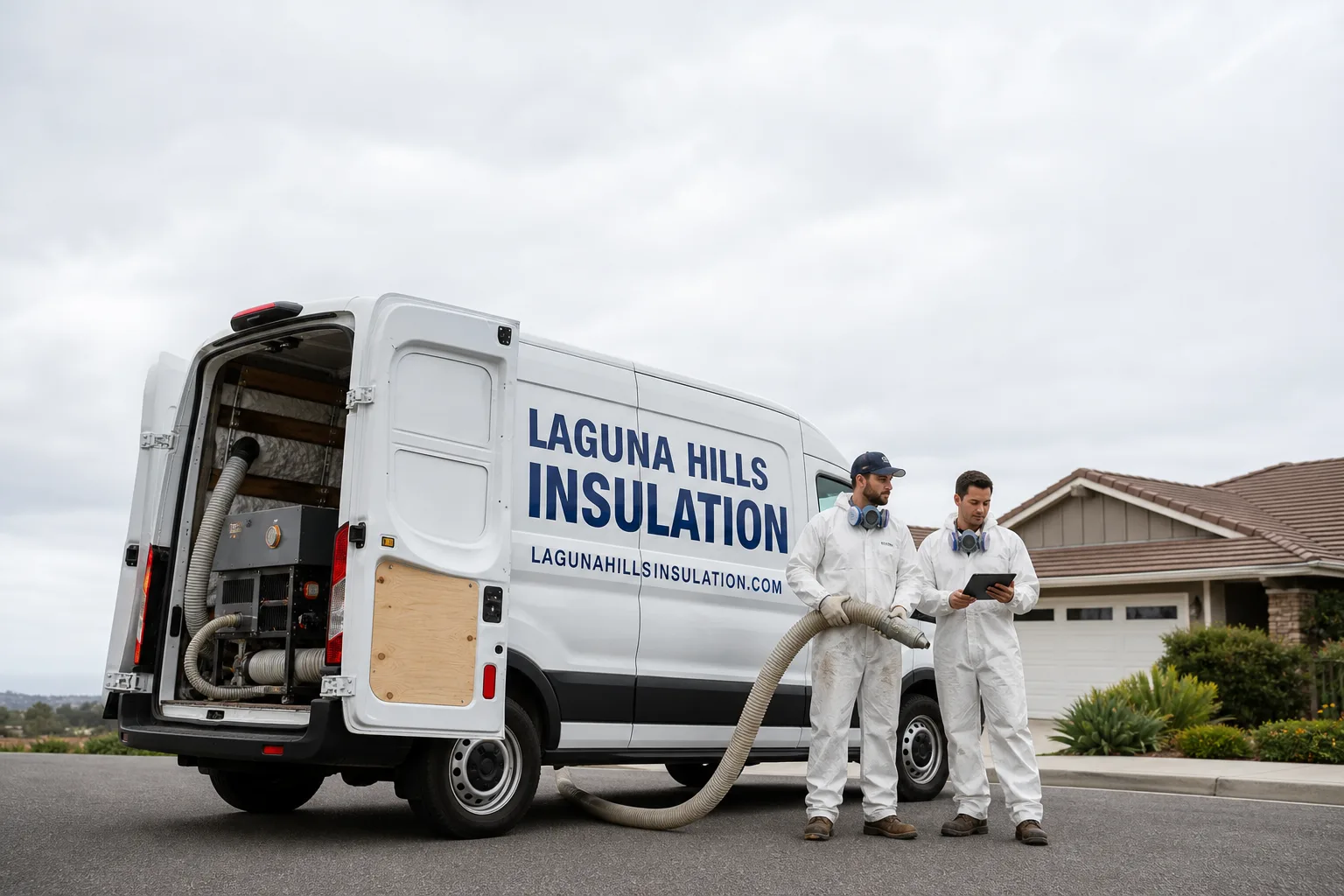
Fast, Reliable Spray Foam Insulation Across Koreatown
Spray foam insulation in Koreatown runs $2.50 – $6.80 per board foot installed, with a typical 1,000-square-foot retrofit landing between $3,800 and $9,400 depending on whether you need open-cell or closed-cell foam. Most jobs in Koreatown’s older buildings take one to two days once we get wall cavities or cockloft access sorted. If you own or manage a pre-1980 apartment building, duplex, or mixed-use property in the 90005 ZIP and the top floor bakes every afternoon, call (866) 393-6041 for a free estimate.
We know Koreatown’s buildings because we’ve worked inside enough of them. Dense 1920s Spanish duplexes off Wilshire, 1960s low-rise walk-ups near Normandie, brick and stucco apartments packed lot-to-lot along 8th Street. These aren’t new-construction open attics. They’re retrofits through existing walls, ceiling hatches above occupied units, and shared chases that demand careful fire-blocking and tenant coordination. Our crews are in Koreatown regularly, and we schedule around tenant access without turning your building into a construction site.
Why Laguna Hills Insulation Is Koreatown’s Preferred Spray Foam Insulation Company
Garrett Lund runs our spray foam division, and he’s particular about two things: which material actually fits the building, and whether the crew can access the cavity without wrecking the plaster. That’s why Koreatown property owners keep calling us back. We’re not tied to one product line, so when open-cell foam from Icynene is the right call for a shallow cockloft over a top-floor unit on Harvard, that’s what we quote. When closed-cell Demilec makes more sense for a rim joist in a 1970s walk-up near Western and Olympic, we say so.
Our reviews from Koreatown customers mention the same things: crews who showed up when they said they would, explained the knob-and-tube situation honestly, and left the building cleaner than they found it. We hold a strong local reputation for retrofit work in occupied buildings, which is the harder kind of insulation to do well. Response time to Koreatown is typically same-week for estimates, and we can often schedule installation within seven to ten days once materials are confirmed.
What builds trust in this neighborhood is knowing the difference between a 1920s cavity wall and a 1960s wood-frame chase. We’ve done both. We know where fire-blocking belongs, where foam expansion can crack brittle plaster, and when legacy wiring needs attention before a single pass of the spray gun. That’s not general insulation knowledge. That’s Koreatown-specific experience.
Open Cell Spray Foam in Koreatown
Open Cell Spray Foam in Koreatown is the workhorse retrofit material for the shallow cocklofts and shared wall cavities common in the neighborhood’s pre-1980 housing stock. Open-cell foam runs about $2.50 – $4.50 per board foot installed, expands roughly 100 times its liquid volume, and air-seals while adding roughly R-3.5 per inch. For a top-floor unit in a 1960s low-rise near Vermont Avenue where the afternoon sun turns the ceiling into a radiant panel, open-cell foam applied to the underside of the roof deck cuts the heat load dramatically without adding structural weight to older framing.
When a Koreatown homeowner needs this, it’s usually because the top floor is uninhabitable from June through October. The low-slope or flat roof above has been absorbing heat since noon, and there’s zero insulation in the cavity between ceiling and roof deck. Open-cell foam fills that space, seals the small air leaks around old electrical penetrations, and brings the ceiling surface temperature down within hours of application.
Cockloft Retrofits Above Occupied Units
Most Korean-era apartment blocks here have cockloft space measured in inches, not feet. Access means a cramped ceiling hatch, often in a hallway closet or above a bedroom. Our techs work through those hatches, apply the foam from within the cavity, and leave the apartment below untouched.
Interior Wall Cavities Without Demolition
For 1920s Spanish duplexes with uninsulated plaster-over-lath walls, open-cell foam can be injected through small access holes drilled behind baseboards or through closet walls. The foam expands to fill irregular old cavities, then the holes are patched and painted. No siding removal, no drywall tear-out, no tenant relocation.
Spray Foam Insulation Contractors in Koreatown
Spray Foam Insulation Contractors in Koreatown who understand the neighborhood’s building stock are rare, because most companies train on new construction in the Valley or Orange County and treat a 1920s duplex like a 2020 tract home. That approach fails here. We run a different playbook for Koreatown: assess the wiring first, map the chases and fire assemblies, confirm roof leak status before any closed-cell application, then foam. Closed-cell spray foam from Demilec or Icynene runs $4.50 – $6.80 per board foot installed and delivers R-6.5 per inch plus a vapor barrier in a single pass.
Koreatown property owners call us when they need a contractor who can work around tenants, respect original plaster and trim, and document fire-blocking compliance for building inspectors. The job involves more prep than spraying: testing for knob-and-tube, confirming shared-wall fire ratings, and placing injection ports so foam expansion doesn’t displace 60-year-old lath.
Fire-Rated Shared Wall Assemblies
In dense apartment buildings, the wall between units is often a fire-rated assembly. Foam installed without proper intumescent coatings can bridge that assembly and compromise the rating. We verify what’s required and install accordingly.
Rim Joist Sealing in Walk-Ups
1960s low-rise walk-up buildings in Koreatown leak air at the rim joist where floor framing meets the foundation. Closed-cell foam seals those gaps, keeps conditioned air in, and blocks rodent and insect entry paths in one application.
Trusted Brands We Service in Koreatown
We stock and install spray foam from Icynene and Demilec, two of the most recognized open- and closed-cell product lines in the industry. We also work with Owens Corning, Johns Manville, Knauf, and Rockwool when the job calls for a hybrid approach: spray foam for air sealing, mineral wool or fiberglass for bulk thermal resistance. That’s the material-agnostic position we take on every Koreatown job. The right insulation for your building, not just the easiest one to install. Eight brands. Three methods. One specialist.
Common Spray Foam Insulation Problems We See in Koreatown Homes
- Knob-and-tube wiring inside wall cavities. Spraying foam directly over legacy wiring without isolating it first can create overheating hazards. We test, reroute, or sleeve the wiring before any foam goes in, which adds a step most contractors skip in this ZIP.
- Plaster cracking from foam expansion. In the shared chases of 1960s low-rise apartments, open-cell foam can displace brittle plaster or original trim if injection ports aren’t placed carefully. We drill small, spaced ports and monitor expansion as we spray.
- Moisture trapping in unvented cocklofts. Top-floor cocklofts with shallow clearance often lack venting. Closed-cell foam seals so tightly that an existing roof leak turns into hidden rot. We always check the roof membrane before recommending closed-cell in these spaces.
- Fire-rating compromise in shared walls. Foam bridging a fire-rated assembly between units is a code violation and a genuine safety issue. We verify assembly ratings and apply intumescent coatings where required.
Pricing for Spray Foam Insulation in Koreatown, CA
Here are honest numbers for Koreatown’s market. Open-cell spray foam runs $2.50 – $4.50 per board foot, closed-cell $4.50 – $6.80 per board foot. A top-floor cockloft retrofit in a 1920s duplex near 8th and Western typically lands between $2,800 and $5,500. An interior wall cavity retrofit for a one-bedroom unit runs $1,900 – $4,200. Rim joist sealing around a 1960s walk-up foundation runs $1,500 – $3,800 for the full perimeter.
What moves the price in Koreatown specifically: access difficulty through cramped hatches, whether knob-and-tube work is required, tenant scheduling constraints, and whether fire-rated assembly documentation is needed. We give you a written quote before any work begins, and the estimate is free. Call (866) 393-6041 to schedule yours.
We Also Serve Cities Near Koreatown
Beyond Koreatown, our crews regularly work in Los Angeles, Echo Park, Silver Lake, and Hollywood. If your building sits near the Wilshire corridor or just north of the 10 in a neighboring neighborhood, we can likely schedule you on the same route as our Koreatown work. Read more about our Spray Foam Insulation capabilities or see our full service area for Spray Foam Insulation in Koreatown.
Serving Koreatown, CA — Our Local Coverage Area
We’re based in the Koreatown area and know this community well. Use the map below to see our service coverage — if you’re nearby, we can almost certainly help.
FAQs About Spray Foam Insulation in Koreatown
Yes. We access the cockloft through the existing ceiling hatch, typically in a hallway closet or above a bedroom, and apply open-cell foam to the underside of the roof deck from within the cavity. The ceiling below stays intact, and tenants can usually remain in the unit during the work, which takes one day for most top-floor retrofits in Koreatown’s older low-rise buildings.
Knob-and-tube wiring must be tested, and often rerouted or covered with a protective sleeve, before foam touches the cavity. Spray foam directly over live legacy wiring creates an overheating hazard, which is why our crews always address wiring first. Call (866) 393-6041 if you suspect your 1920s duplex still has original wiring, and we’ll include a wiring check in the estimate.
Open-cell spray foam absorbs sound transmission through shared walls and floor cavities, cutting down on the constant neighbor noise that’s everywhere in a crowded ZIP like 90005. In a 1960s walk-up with paper-thin demising walls, injecting open-cell foam into the shared wall cavity can reduce both airborne noise and the flanking sound that travels through gaps around outlets and piping.
Yes, with one important caveat. The low-slope or flat roof membrane must be sound before you seal the underside with closed-cell foam, because closed-cell acts as a vapor barrier and can trap moisture from any roof leak. We inspect the roof condition first and recommend open-cell where venting or leak history is uncertain. For a specific roof assessment in Koreatown, call (866) 393-6041.
No, for open-cell foam in a cockloft or wall cavity, tenants can typically stay in the unit. We keep the work contained to the cavity or hatch area, run ventilation as needed, and the foam cures within hours. For larger closed-cell jobs, we’ll advise on a short window where the unit should be empty, usually four to six hours. We schedule around your tenants, not the other way around.
Written by Garrett Lund, Owner at Laguna Hills Insulation, serving Koreatown and greater Los Angeles.