
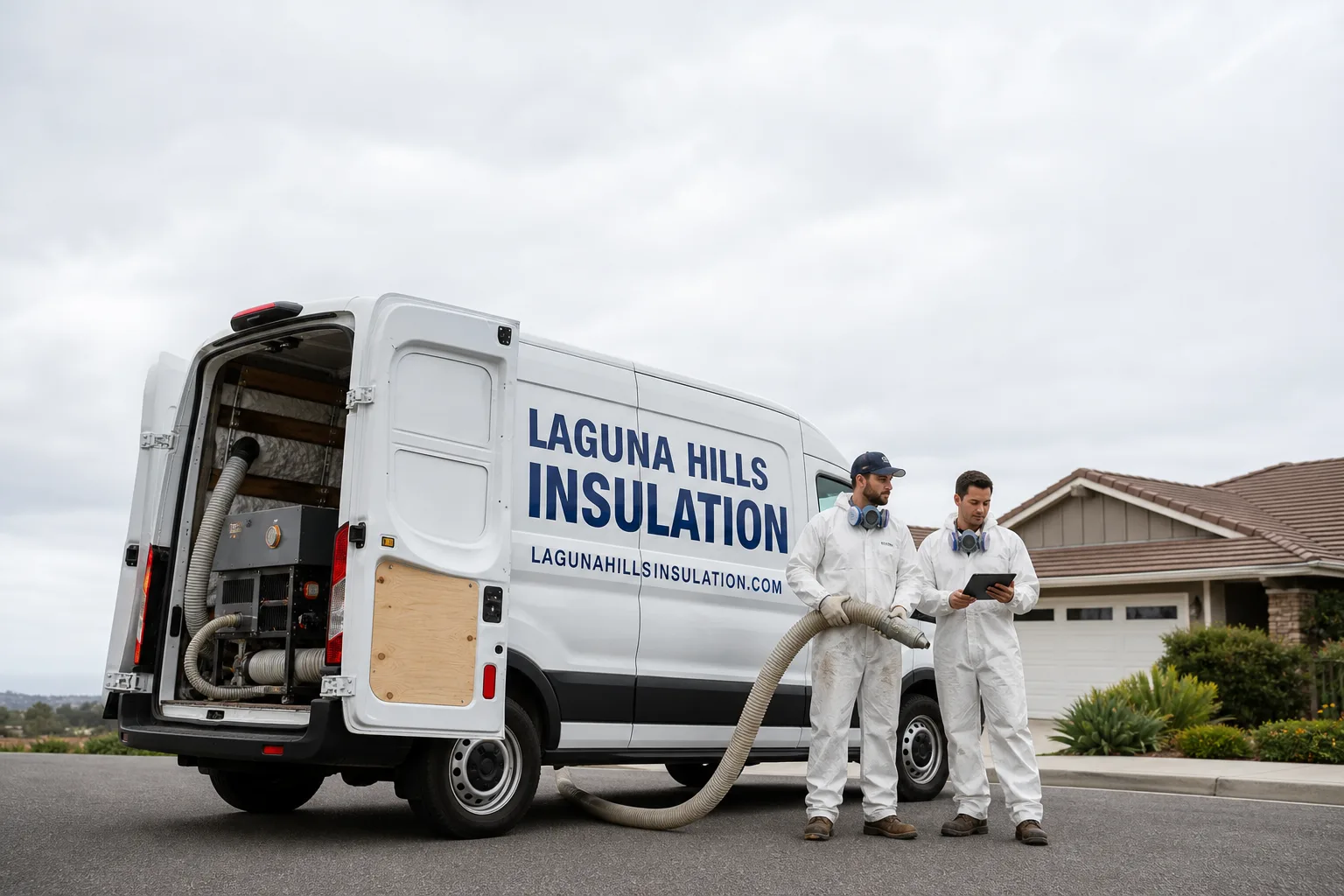
Fast, Reliable Attic Insulation Across Venice
Attic insulation in Venice usually costs between $1,800 and $6,400 depending on attic size, access, and material type. Most jobs are completed in one to two days, and our techs work around the tight alleyways and narrow lots that define Venice’s historic districts. We know the bungalows off Washington Boulevard have almost no attic clearance, and we know the newer three-story homes on the walk streets need a different approach entirely. If you’re losing heat on cool marine-layer nights or can hear Abbot Kinney traffic from inside your bedroom, call (866) 393-6041 for a free estimate. We respond to Venice neighborhoods within 24 hours typically, same-day for urgent moisture or rodent damage.
Why Laguna Hills Insulation Is Venice’s Preferred Attic Insulation Company
Our crew has worked on more 1920s courtyard apartments and 1940s bungalows in Venice than we can count. Homeowners here consistently mention two things in their feedback: we actually show up on time, and we tell them which material fits their specific attic rather than pushing whatever product we’d rather install. The 90291 and 90294 zip codes have their own rhythm. Parking is tight, attics are shallow, and the salt air has usually done a number on the attic hatch hardware before we ever open it. Venice customers seem to appreciate that we treat that reality as part of the job rather than an excuse to charge more.
Garrett Lund built the team around a material-agnostic approach. If your 1950s courtyard apartment needs dense-packed cellulose from GreenFiber to cut noise between units, that’s what we recommend. If a newer home near the canals needs closed-cell spray foam from Demilec to seal the roofline against marine-layer moisture, we’ll say that plainly. We stock eight manufacturer brands and install three methods in-house, so we’re never forcing a square peg into a round attic. When a Venice customer calls for a top-up, they get an honest answer about whether a top-up will actually solve the problem or whether old, compressed batts need full removal first.
Insulation Contractors in Venice
Insulation Contractors in Venice work on homes that inland contractors rarely see. Attics here are often accessible only through a small hatch in a closet ceiling, and the insulation work begins with checking whether that hatch even opens. Salt-air corrosion seizes hinges, rusts latches, and sometimes fuses the access panel shut. We handle that first, because no insulation goes in through a hatch you can’t open. A typical attic insulation job in Venice runs $2,200 to $5,800, depending on whether we’re topping up existing insulation or removing failing material and starting fresh.
Corrosion Assessment Before Access
Before any insulation goes in, we inspect the attic hatch, pull-down ladder if you have one, and any mechanical hardware in the attic path. Marine-layer damp means bare steel fasteners and hinges corrode within a few years. We replace seized hardware with stainless or coated components so you can access your attic after we leave.
Removal of Failed Insulation
In Venice’s older wood-frame bungalows, fiberglass batts routinely soak up coastal moisture and collapse. Mold follows. We remove the failed material, treat the affected framing where needed, and prep the cavity for fresh insulation matched to your attic’s ventilation and moisture profile.
Attic Ventilation in Venice
Attic Ventilation in Venice is a make-or-break detail because the marine layer doesn’t just cool the air, it delivers moisture. Under-ventilated attics trap that damp against insulation and framing. Mold grows, thermal performance tanks, and you’re back where you started. A ventilation upgrade alongside insulation typically adds $900 to $2,400 to the job, depending on whether we’re adding ridge vents, soffit vents, or a powered unit. We address ventilation on nearly every Venice retrofit, especially in pre-1960 homes that were built with little more than a gable vent if they got anything at all.
Ridge and Soffit Venting
Older Venice attics often have no continuous air path. We cut in soffit intake vents and ridge exhaust vents so air moves through naturally. That airflow dries the attic, protects the insulation you just paid for, and stops the mold cycle that ruined whatever was up there before.
Baffles and Chute Prep
When we blow in insulation, we install baffles at the eaves first so the insulation doesn’t block your only airflow. It’s a small step that most single-line insulation crews skip. In Venice’s shallow attic cavities, skipping baffles means a damp attic within a season or two.
Trusted Brands We Service in Venice
We install and service insulation from Owens Corning, Johns Manville, Demilec, and GreenFiber in Venice, and we keep common parts and sealants stocked for fast turnaround jobs. If you already have Owens Corning fiberglass and just need a top-up, we’ll match it. If you’re ready to switch to a higher-performance Demilec closed-cell foam for a new roofline or a noisy street-facing wall, that gear is on the truck. Venice customers don’t wait weeks for materials because we carry manufacturer product lines across fiberglass, mineral wool, spray foam, and cellulose. See our full Attic Insulation approach for more on how we match material to the structure.
Common Attic Insulation Problems We See in Venice Homes
- Corroded attic hatches and garage-door hardware. Salt air from the beach attacks steel hinges, springs, and tracks within a few years. When the attic access is seized shut, the insulation can’t be installed or inspected, so we replace the hardware first as part of the job.
- Wet fiberglass from marine-layer infiltration. Unsealed attic bypasses pull damp ocean air into the insulation cavity. Fiberglass batts soak it up, sag, and lose their R-value. This always requires removal, never a top-up.
- Rodent-compressed insulation in shallow cavities. Rats and mice squeeze into Venice’s raised foundations and shimmy up wall cavities into attics. They burrow through insulation, foul it with droppings, and destroy the thermal barrier. Full removal and air-sealing is the only fix.
- Street noise carried through uninsulated ceilings. Lincoln Boulevard, Abbot Kinney, and the airport approach path send low-frequency rumble into older wood-frame bungalows. Dense-packed cellulose or higher-R-value fiberglass overhead makes a measurable dent in that noise.
Pricing for Attic Insulation in Venice, CA
Here’s the honest breakdown for Venice. A basic blown-in top-up in a small 800-square-foot attic runs $1,800 to $2,800. Full removal and replacement in a 1950s bungalow runs $3,200 to $5,800. Closed-cell spray foam on the roofline for a newer contemporary home near the canals runs $5,000 to $9,500 depending on square footage and depth. Attic ventilation upgrades add $900 to $2,400. Compare that to Santa Monica, where we see similar pricing but often easier attic access, or Culver City, where attic cavities are sometimes larger. Every estimate is free, and we give you a written line-item quote before any work begins. Call (866) 393-6041 to schedule a walkthrough.
We Also Serve Cities Near Venice
Our crew regularly works in Santa Monica, Culver City, Ladera Heights, and Century City, so scheduling across the Westside is straightforward. If you’re in Venice proper or just at the edge, we’re already moving through your neighborhood most weeks. Same-week appointments are usually available across the 90291 and 90294 service area.
Serving Venice, CA — Our Local Coverage Area
We’re based in the Venice area and know this community well. Use the map below to see our service coverage — if you’re nearby, we can almost certainly help.
FAQs About Attic Insulation in Venice
Salt air corrodes the steel torsion springs on garage doors within three to five years, and Venice’s persistent marine layer accelerates that compared to inland neighborhoods. We inspect spring condition before any attic work because the garage is often the staging area and access point for equipment, and a snapped spring can take the door down with it. Call (866) 393-6041 if yours has snapped, and we’ll replace it with a galvanized or coated spring during your insulation retrofit.
Dense insulation in the attic floor, especially cellulose from GreenFiber or high-R-value fiberglass, absorbs the low-frequency traffic rumble that travels through the uninsulated ceilings of Venice’s older wood-frame homes. Street-facing bungalows benefit the most. The difference is noticeable on the bedroom side of the house within a day of installation.
It can, but only if ventilation and air-sealing are addressed at the same time. Insulation alone traps the same moisture that’s already moving through your walls and ceiling. We seal the attic bypasses and add correct ventilation before or during the insulation install, so the marine-layer damp doesn’t ruin the new material. Moisture problems are the reason we treat ventilation as a standard part of Venice retrofits.
For minimal cavities, dense-packed cellulose or blow-in fiberglass typically outperforms batts because the material conforms to irregular joist spacing and fills the cavity completely. If the roofline is accessible and moisture is a concern, closed-cell spray foam from Demilec gives you air sealing and thermal resistance in a single thinner application. We’ll tell you which fits after we see the attic, and the quote is free.
We replace rusted tracks with galvanized or coated steel, swap steel rollers for nylon, and install stainless fasteners wherever the old hardware has seized or weakened. On one 1940s bungalow off Abbot Kinney, our tech found the torsion spring so rusted that it snapped during attic access. We replaced it with a galvanized spring and stainless fasteners, then blew in Owens Corning fiberglass to R-38 and added a ridge vent to dry the attic. That’s the standard approach when corrosion is the first thing we find.
If your attic needs a second opinion or you’re tired of guessing, call (866) 393-6041. Estimates are free, and we’ll tell you straight what your Venice home actually needs.
Written by Garrett Lund, Owner at Laguna Hills Insulation, serving Venice since our first retrofit on the Westside.