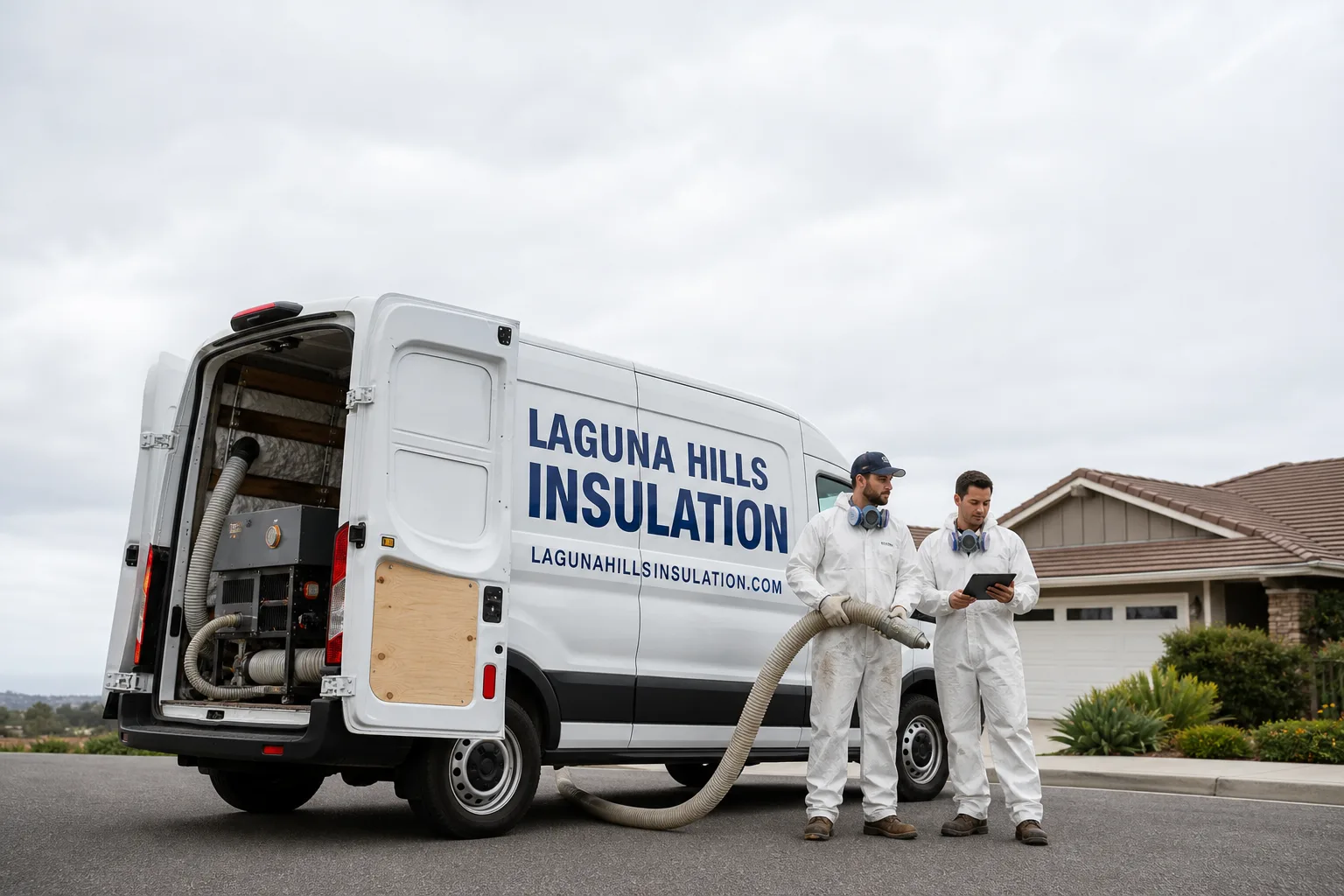
Fast, Reliable Attic Insulation Across Orange
Attic insulation in Orange typically runs $1,800 – $4,200 for a full retrofit, with top-ups and air-sealing projects starting around $900. Most jobs wrap up in a single day. If you’re sweating through a second-story bedroom in August or watching your AC run nonstop, the problem is usually above your head, not in the unit itself. We work in Orange every week and know the housing stock here better than most contractors who just pass through on the 55. Call (866) 393-6041 and we’ll give you a straight answer on what your attic actually needs.
Why Laguna Hills Insulation Is Orange’s Preferred Attic Insulation Company
Orange homeowners don’t have one kind of house. You’ve got 1910s Craftsman bungalows two blocks from the Plaza and 1960s tract ranches out past Tustin Avenue. Those homes need different insulation strategies, different materials, and different installation methods. We stock eight manufacturer brands, so we’re not going to pitch you Owens Corning just because that’s what’s on the truck. If your east-side ranch needs air-sealing and radiant barrier before new blown-in cellulose, we’ll say so. If your Old Towne bungalow needs a breathable mineral wool system that won’t trigger design-review headaches, we’ll install Rockwool and explain why.
Garrett Lund runs our team with a simple rule: the house decides the material, not our inventory. That’s why we carry Johns Manville and Knauf fiberglass alongside Icynene and Demilec spray foam. Most Orange attics we see on the east side still have original R-7 batts that have compressed to maybe R-4. That’s a solvable problem. Call (866) 393-6041 and we’ll come out, climb up, and show you exactly what’s happening.
Radiant Barrier in Orange
Radiant Barrier in Orange is often the highest-ROI upgrade we install, because your attic hits 130°F in late summer and stays hot well into October. A radiant barrier stapled to the underside of your roof deck reflects radiant heat before it ever reaches your insulation. In an Orange attic, that’s the difference between your AC running for 20 minutes and running for an hour.
Why It Matters More Here Than R-Value
Most Orange homes sit inland from the coastal marine layer, which means the Santa Ana winds push hot, dry air through the canyons in September and October and your attic becomes an oven. Adding more fiberglass on the attic floor doesn’t stop radiant heat from baking the top of that insulation. A radiant barrier attacks the problem at the source. For a typical 1,500-square-foot Orange ranch, a radiant barrier install runs $1,200 – $2,500, and we usually pair it with air-sealing around the top plates and recessed lights while we’re up there.
What the Job Involves
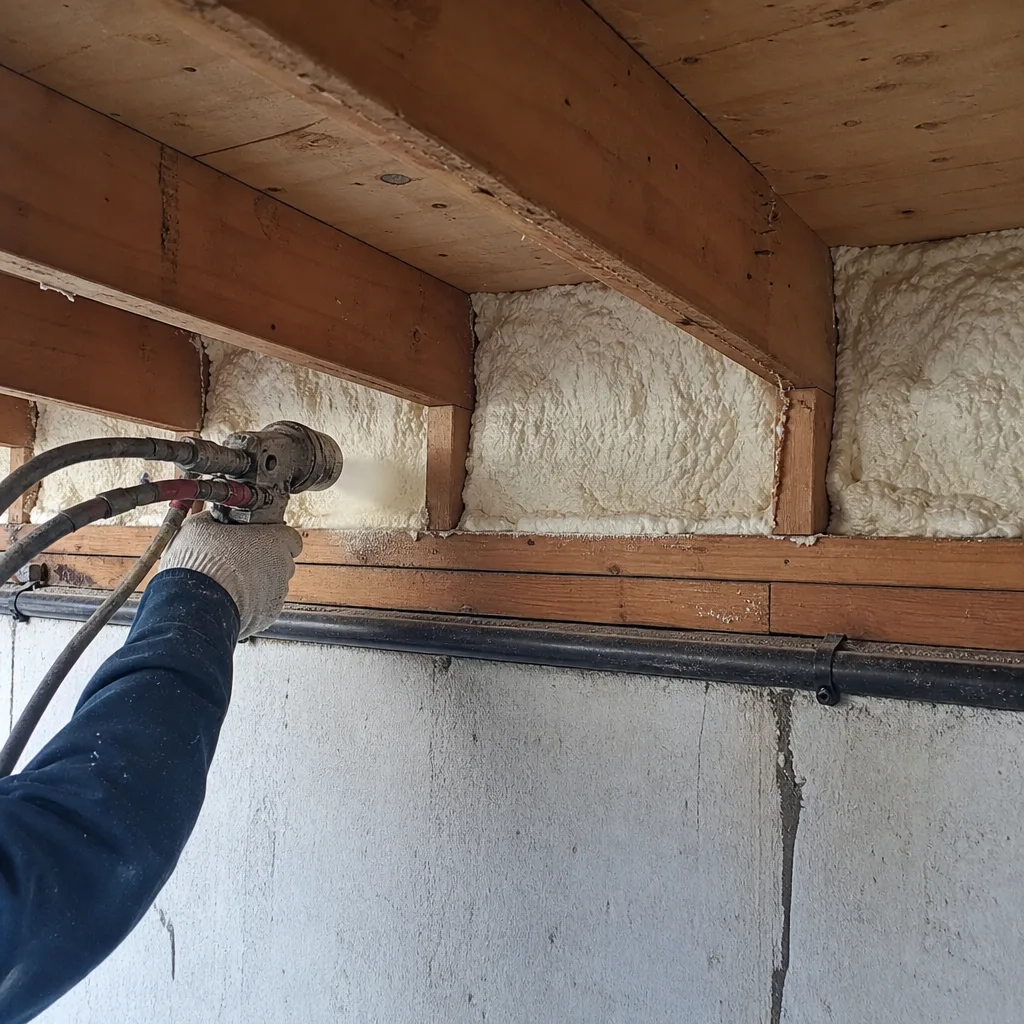
We staple or tack a foil-faced barrier to the roof deck, leaving an air gap so heat doesn’t conduct through. It’s not a replacement for insulation. It’s a multiplier. In east-side tract homes with sagging R-7 batts, we’ll pull the old material first, air-seal, then install radiant barrier and new blown-in insulation in one trip. The difference on a 95-degree day is just uncomfortable to not uncomfortable on the second floor.
Attic Cleaning Services in Orange
Attic Cleaning Services in Orange matter more here than in newer communities, because pre-war bungalows have been collecting dust, rodent debris, and old insulation scraps for 100 years. We don’t just vacuum out the loose junk. We remove old batts, inspect the wiring and framing, and prep the space so whatever insulation you put in actually performs.
What We Remove and Why
Old fiberglass batts in east-side ranches hold dust and rodent droppings and lose their loft after 20 years of 130° attic heat. In Old Towne bungalows, we often find vermiculite from the 1940s mixed in with the original wood shavings. We bag it, sanitize the deck, and leave you a clean cavity ready for new material. A full attic cleaning for a 1,200-square-foot Orange home runs $800 – $1,800, and it’s worth doing before any top-up so you’re not burying old problems under new insulation.
Prep Work That Prevents Bigger Problems
Cleaning is the step where we spot the stuff you can’t see from the hatch: cracked vent boots, knob-and-tube wiring wrapped in old newspaper, a bathroom fan venting directly into the attic. We bring those to your attention before we put a single layer of new material down. Orange’s building department isn’t looking over our shoulder on a standard insulation job, but we’d rather flag a $30 vent boot than find mold on the ceiling three years later.
What happens when you call
- 1
A real person answersNo phone trees — you reach a local pro.
- 2
You get an upfront price rangeHonest numbers before anyone is dispatched.
- 3
A background-checked tech heads outLicensed & insured, dispatched right away.
- 4
You approve before work beginsNothing starts until you say go.
Trusted Brands We Service in Orange
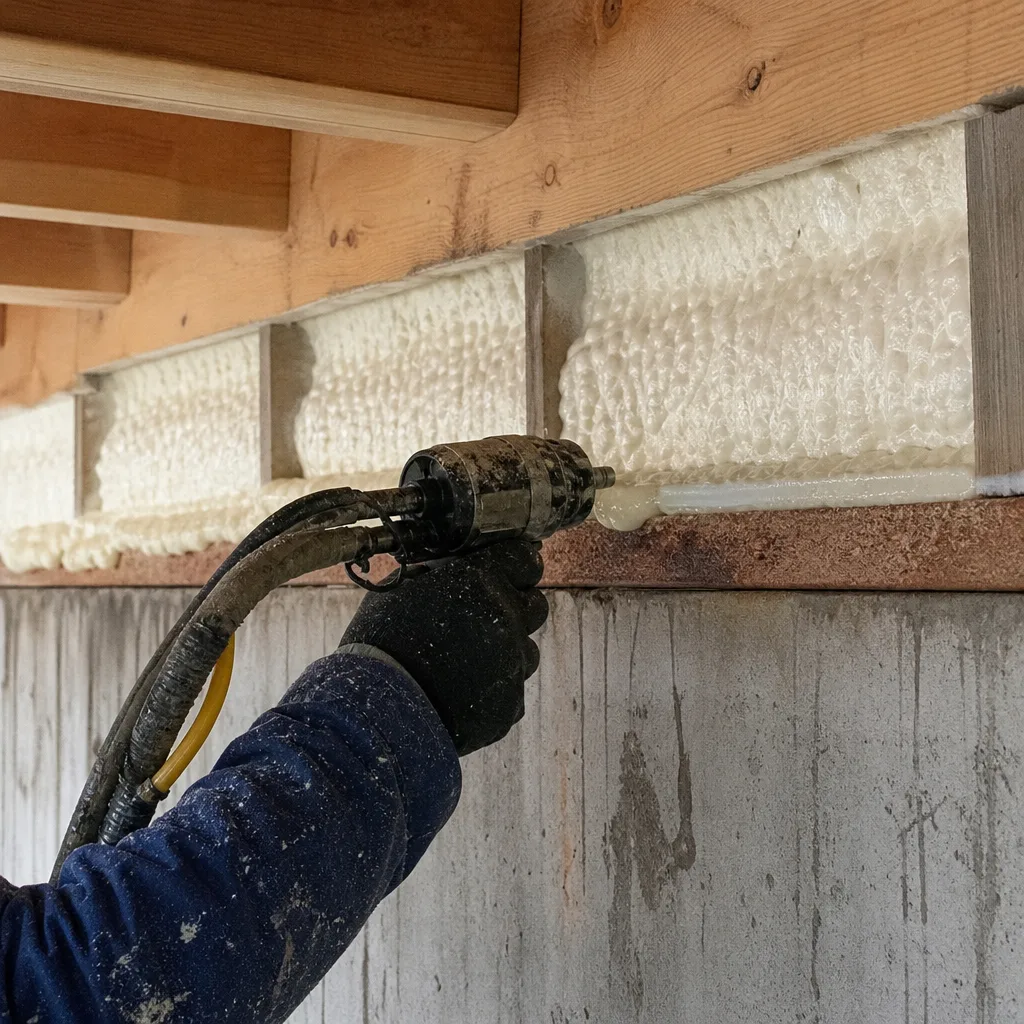
We install and service insulation from Owens Corning, Johns Manville, Knauf, and Rockwool, plus spray foam from Icynene and Demilec. That means an Orange homeowner with a 1920s bungalow gets a different material recommendation than someone in a 1972 ranch, and we stock enough product depth to act on that recommendation. GreenFiber cellulose gives the sustainability-minded client a recycled-content option that performs well in Orange’s dry heat. We don’t push one brand. We carry parts and materials for all of them and can usually start within a week of your free estimate. Our Attic Insulation team works across the full method range, so the material gets chosen for the house, not the truck.
Common Attic Insulation Problems We See in Orange Homes
- Compressed original batts in 1960s-70s ranches. The east side of Orange, from Tustin Avenue over to the 55, is full of homes with original R-7 fiberglass that’s sagged to half its rated value. The fix is removal, air-sealing, and new blown-in material, not a top-up.
- Spray foam misapplied in pre-war bungalows. Old Towne homes with lath-and-plaster walls need breathable insulation. Closed-cell foam can trap moisture in those walls and cause paint to fail within two years, not to mention design-review complications.
- Attic temperatures over 130°F degrading insulation faster. Orange’s inland position means late-summer heat penetrates even well-insulated attics. Radiant barrier and proper ventilation extend the life of whatever material you install.
- Knob-and-tube wiring complicating air-sealing. In 1910s-1920s homes in 92866, old wiring is common. Air-sealing around it requires careful work so you’re not creating a fire hazard or failing the historical review process.
Pricing for Attic Insulation in Orange, CA
Here’s what we actually charge in Orange as of the last year, and what drives the final number:
- Attic top-up with blown-in fiberglass: $900 – $1,800 for a typical 1,200-1,500 sq. ft. home. This works when your existing batts are intact but under-performing.
- Full removal and reinsulation (fiberglass or cellulose): $2,200 – $4,200. Most common on east-side ranches with degraded original batts.
- Radiant barrier install: $1,200 – $2,500, depending on roof pitch and accessibility.
- Attic cleaning and prep: $800 – $1,800, including removal, sanitizing, and inspection.
- Mineral wool (Rockwool) batts in accessible attics: $2,800 – $4,800. Best choice for fire-prone zones and historic homes needing breathability.
The biggest cost variables in Orange are access (steep roof pitches on pre-war homes), the condition of what’s already up there, and whether design-review constraints limit material choice. Estimates are free call (866) 393-6041 and we’ll give you a firm number, not a range that balloons later.
We Also Serve Cities Near Orange
Our crews work throughout central Orange County, and we regularly run jobs in Villa Park, North Tustin, Tustin, and Anaheim. If you’re in one of those communities, the same material-agnostic approach applies. You can read more about our local coverage on the Attic Insulation in Orange page, where we break down neighborhood-by-neighborhood differences in housing stock and what they mean for your attic.
Serving Orange, CA — Our Local Coverage Area
We’re based in the Orange area and know this community well. Use the map below to see our service coverage — if you’re nearby, we can almost certainly help.
FAQs About Attic Insulation in Orange
In most cases, no permit is required for insulation work itself in Orange, but the Old Towne design-review district (92866) limits exterior changes, which means attic ventilation additions or roof modifications on the historic register may need review. Interior insulation work that doesn’t alter the roofline typically doesn’t trigger review. We handle the paperwork if a scope item crosses that line, and we’ll tell you before you spend money. Call (866) 393-6041 for a free assessment.
Yes, but it requires careful air-sealing and material choices. We never bury active knob-and-tube under blown-in insulation, and we avoid spray foam around old wiring because it can trap heat and compound fire risks. Our solution in Orange bungalows is to isolate the wiring, air-seal with non-conductive materials, and install breathable insulation in the open cavities. It’s slower work, but it’s the only way to do it right.
Because Orange attics regularly exceed 130°F in August, and R-value measures conductive heat transfer, not radiant heat. A radiant barrier reflects heat at the roof deck before it ever reaches your insulation. In Orange’s inland-adjacent climate, we see bigger comfort and energy gains from radiant barrier plus moderate R-value than from extreme R-value alone. Both matter, but the order of operations matters more.
We treat those homes as breathable assemblies. That means mineral wool (Rockwool) or loose-fill cellulose in the attic, not closed-cell spray foam, which can trap moisture behind lath-and-plaster and cause paint failure and historic fabric damage. If the walls themselves were never insulated, we evaluate whether balloon-frame cavities can be safely filled or whether that wall is better left as-is. The house tells us, not the other way around.
A second story that won’t cool below 80°F in summer, AC runtime that climbs every year, or original batts that look flat and compressed when you peer into the attic. If your home was built between 1955 and 1975 in the 92862-92864 area, it almost certainly has R-7 batts that have degraded to R-4 or worse. We’ll confirm with a free attic inspection and give you a straight recommendation.
Ready to talk specifics? Call (866) 393-6041 and we’ll schedule a free estimate in Orange. We’ll climb into your attic, show you what’s actually there, and quote you a number you can take to the bank. No pressure, no vague ranges, and no pushing a product that doesn’t fit your house.
Written by Garrett Lund, Owner at Laguna Hills Insulation, serving Orange homeowners with material-agnostic attic insulation solutions since the company’s founding.