
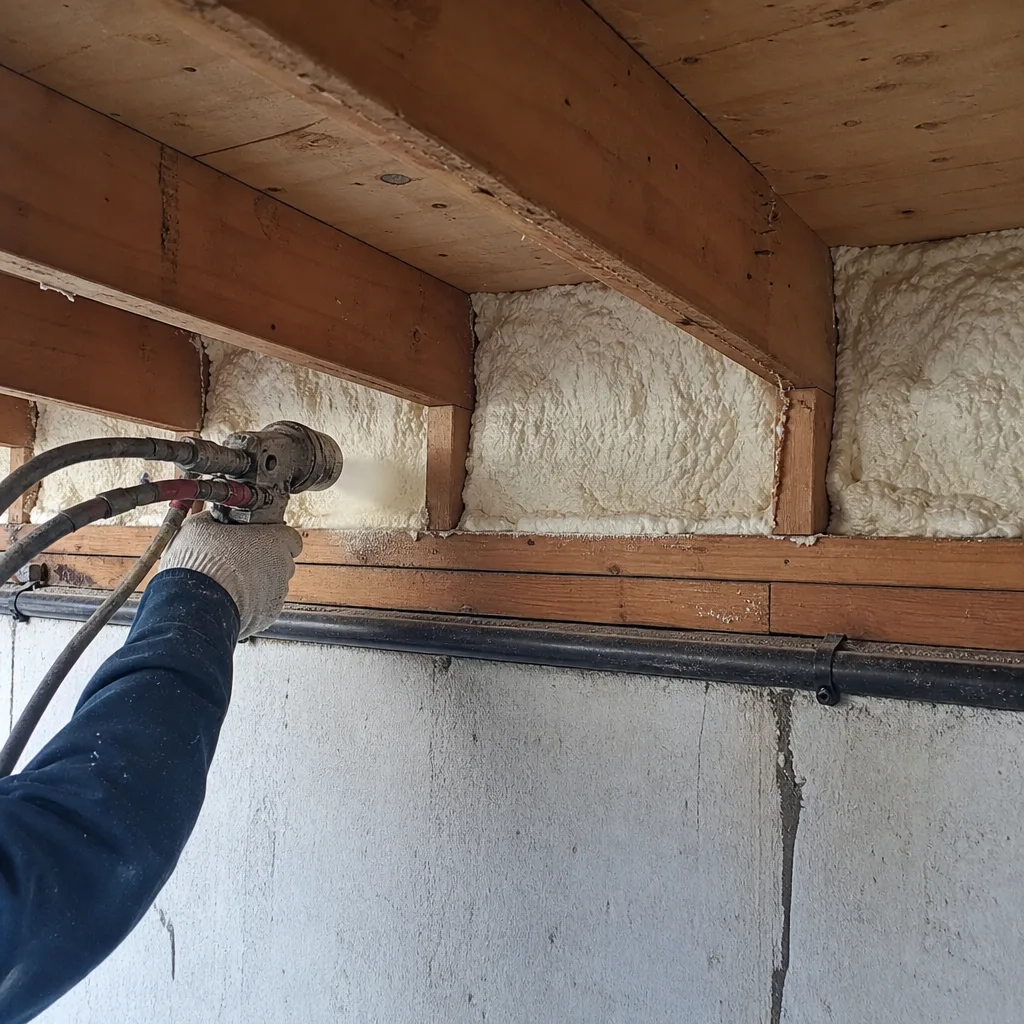
How Much Does Radiant Barrier Installation Cost in Laguna Hills?
Radiant barrier installation in Laguna Hills typically costs $1,200 to $3,400 for a standard single-family home, with most homeowners landing around $1,800 to $2,400 for a foil-faced barrier stapled to the roof rafters of a 1,500 to 2,200 square foot attic. Larger homes, spray-on applications, and older roofs that need prep work before installation push the number higher. If you’ve been told you need a radiant barrier in Laguna Hills and want a real number before anyone climbs into your attic, this guide breaks down what each piece of the job actually costs here.
We install radiant barriers across south Orange County, and the pricing here reflects what we quote and what our clients end up paying. No vague “it depends.” Real ranges tied to real homes in Laguna Hills.
Radiant Barrier Installation Cost Breakdown (2026)
Here’s what the line items look like for a typical Laguna Hills home in the 1,500 to 2,200 square foot range with an accessible pitched roof and standard attic configuration:
| Line Item | Typical Price Range (Laguna Hills, 2026) |
|---|---|
| Foil radiant barrier, stapled to rafters (per sq ft of attic) | $0.90 – $1.60 |
| Spray-on radiant barrier coating (per sq ft) | $1.50 – $2.75 |
| Attic prep and debris removal (existing insulation, dust, old radiant material) | $150 – $450 |
| Air sealing around penetrations (recommended add-on) | $200 – $600 |
| Ductwork protective wrap (if ducts run through attic) | $180 – $500 |
| Radiant barrier over attic floor (vs. rafters) | $1.10 – $1.90 per sq ft |
| Permit and inspection (varies by scope) | $0 – $250 |
Total project cost on a typical Laguna Hills home runs $1,200 to $3,400. A small ranch-style home with a simple gable roof at the low end. A split-level with a complex roofline, low clearances, or ductwork that needs protective wrapping sits at the top.
The single biggest factor is method. Foil barriers require someone to physically staple foil across rafters, which is labor-intensive per square foot but uses inexpensive material. Spray-on coatings go down faster but cost more per square foot for the product itself. Rafter-mounted barriers cost more than floor-mounted because of the labor, but they let you keep your existing attic insulation and use the attic for storage.
If your home has a finished or partially-finished attic, expect higher numbers. Same for homes with blown-in fiberglass or cellulose insulation that needs to be moved, bagged, and re-blown around the barrier. That labor is real and it costs money.
What Affects Radiant Barrier Installation Pricing in Laguna Hills
Pricing in Laguna Hills isn’t the same as pricing in, say, Riverside or Bakersfield. Several local factors shape the number on your quote.
- Attic configuration and roof pitch. The homes in Nellie Gail Ranch and Moulton Ranch tend to have steeper roof pitches and multi-gable rooflines. That’s more surface area to cover, more awkward cutting, and slower work than a simple ranch plan. A steep pitch adds $300 to $700 to most jobs here.
- Inland heat load and attic temperature. Laguna Hills sits inland enough that summer attic temperatures climb past 140°F regularly. That’s precisely why radiant barriers work so well here and why we install more of them than coastal contractors do. It also means installation scheduling matters – crews start early on hot days, and that can affect labor rate quotes for larger jobs.
- Existing attic insulation and ductwork. Many Laguna Hills homes built in the 1970s and 1980s still have original fiberglass batts or early blown-in insulation. If it’s in the way, it has to be moved. Ductwork in the attic needs protective wrapping so the barrier doesn’t overheat the supply lines or cause the duct jacket to fail prematurely.
- Rafter-mounted vs. floor-mounted barrier. Rafter-mounted foil is the most effective because it intercepts heat before it enters the attic air. It costs 15 to 25 percent more than floor-mounted barrier because of the labor. Floor-mounted barriers are cheaper but can’t be used if you want attic storage.
- Ventilation compatibility. A radiant barrier without proper attic ventilation can trap heat and moisture. If your attic vents are undersized or blocked (a common issue in older homes with ridge and soffit configurations that have never been updated), we may need to address ventilation before or during the barrier install. That adds $200 to $600.
- Access. Homes with a tight attic scuttle, no walkable decking, or a detached garage roof require more setup. Access adds time, and time is money on any insulation job, including the material-breadth work we do across attic insulation, spray foam, and blown-in insulation projects throughout our service area.
We do a walkthrough before quoting for exactly this reason. A price over the phone is a guess. A price after someone has seen the attic is a plan.
What Is a Radiant Barrier and How Does It Work?
A radiant barrier is a reflective surface – foil, foil-faced sheathing, or a spray-applied reflective coating – that blocks radiant heat from crossing into your attic. In Laguna Hills, the sun beats on roof shingles for six months out of the year. Those shingles absorb and re-radiate heat into the attic, which then radiates into living space below. A radiant barrier interrupts that heat transfer by bouncing radiant heat back toward the roof deck rather than letting it load the attic air and the insulation. It reflects, it doesn’t absorb; that’s the whole thing.
Radiant barriers work differently from the fiberglass, cellulose, mineral wool, and spray foam products we also install. Those materials work on conduction and convection – thermal bulk that slows heat flow through mass. A radiant barrier works on radiation, and it needs an air space on the reflective side to function. That’s why placement matters so much. We carry both heat-bulk insulation (Owens Corning, Johns Manville, Knauf, Rockwool, CertainTeed, GreenFiber) and air-sealing spray foam systems from Icynene and Demilec, which means we can look at your attic and tell you honestly whether a radiant barrier alone is the right move, or whether it needs to work alongside more R-value up top.
Most radiant barrier jobs make the most sense on homes with an accessible pitched roof, existing insulation in decent condition, and a real heat load problem in the summer. If your attic already has a high R-value and a tight air barrier, the added benefit of a radiant barrier is real but smaller.
How to Save on Radiant Barrier Installation
A few things actually move the number down without cutting corners on the install.
- Bundle air sealing with the barrier. If we’re already in the attic, sealing penetrations around recessed lights, top plates, and wiring holes costs $200 to $600 as an add-on. Doing it as a standalone job later costs more because of the setup.
- Choose rafter-mounted foil if you need attic storage, floor-mounted if you don’t. Rafter-mounted barrier costs 15 to 25 percent more, but if you’re already planning to use the attic for storage, you’re going to want it. If not, save the money.
- Schedule in spring or fall. Summer is our busiest season for radiant barrier work in Laguna Hills because that’s when homeowners notice the upstairs heat. Spring and fall jobs sometimes get scheduled faster and at slightly better labor rates.
- Get more than one quote and compare line items, not totals. A $400 difference on the bottom line often comes from a missing add-on. Ask each contractor to break out prep, air sealing, and permit costs. We’re happy to walk through the numbers with you.
- Ask about material options up front. Some installers only offer foil. We stock across material categories and can tell you when a spray-on coating fits the roof geometry better than foil, or when it’s the other way around. The right insulation for your home isn’t always the most expensive one.
Free estimates are standard here. Call (866) 393-6041 and we’ll schedule an attic walkthrough. No pressure and no upsell pitch – just a real line-item quote.
Repair or Replace: Do You Need a Radiant Barrier or Something Else?
This is the question that saves homeowners the most money, and it almost never gets asked. If your attic insulation has collapsed, is wet, is old blown-in material that’s settled to half its rated depth, or if you have visible air leakage (dust staining on insulation, hot ceilings in summer, cold floors in winter), a radiant barrier alone won’t fix it. You need R-value and air sealing first.
Radiant barriers make the most sense when:
- Your attic insulation is intact and at reasonable R-value, but the attic still gets brutally hot in summer
- You have vaulted ceilings with limited space for insulation and want to reduce heat gain through the roof deck
- You’re building a new home or re-roofing and can integrate a barrier during construction
- You want a secondary defense alongside existing insulation in a high-heat-load home
If you’re not sure which category you’re in, we’ll tell you. That’s a promise we can keep because we install across the full spectrum – attic insulation, spray foam, and blown-in – and we’re not locked into one product line. Details on the specific service are on our Radiant Barrier Installation in Laguna Hills page.
Why Compare Radiant Barrier Quotes Carefully in Laguna Hills
A radiant barrier quote in Laguna Hills isn’t the same as a radiant barrier quote in another market, and the biggest pricing gaps we see come from what’s bundled. Some contractors quote the barrier itself and leave air sealing, duct wrap, and prep as “not included” line items that show up later as change orders. Ask every bidder what’s included and what’s not.
Another thing worth paying attention to: which material category the contractor actually stocks and installs. If a company only installs foil, everything looks like a foil job. If a company specializes in spray foam, you’ll get spray foam recommended even when foil was the right answer. We carry eight brands across fiberglass, mineral wool, spray foam, and cellulose – Owens Corning, Johns Manville, Knauf, Rockwool, CertainTeed, Icynene, Demilec, and GreenFiber – so the recommendation is driven by the home’s needs, not by inventory. That includes Rockwool mineral wool (fire-resistant and moisture-resistant) and GreenFiber cellulose for sustainability-focused homeowners, both of which most local installers don’t stock.
We also don’t claim exclusive pricing with any single manufacturer. That means if the honest recommendation is a less expensive product, we’ll say so.
FAQs About Radiant Barrier Installation Cost in Laguna Hills
How much does radiant barrier installation cost in Laguna Hills?
Most Laguna Hills homeowners pay $1,200 to $3,400, with the typical project landing near $1,800 to $2,400 for a 1,500 to 2,200 sq ft home. Rafter-mounted foil runs $0.90 – $1.60 per sq ft of attic; spray-on coatings run $1.50 – $2.75 per sq ft. Larger homes, complicated rooflines, and duct wrapping push toward the top of that range. Call (866) 393-6041 for an exact quote; estimates are free.
Is a radiant barrier worth it in Laguna Hills’ climate?
Yes, and the payback is well documented. In Laguna Hills, attic temperatures regularly exceed 140°F in summer, which is exactly the heat load a radiant barrier is designed to interrupt. Most homes see attic temperature drop by roughly 20 to 30 degrees with a properly installed barrier, which reduces the AC load on the second floor and the ceilings directly under the roof. Typical energy-saving payback runs 3 to 7 years depending on home size and HVAC efficiency.
How long does radiant barrier installation take?
One day, for most Laguna Hills homes. A typical 1,500 to 2,200 sq ft attic takes 4 to 8 hours with a two-person crew. Larger homes, complex rooflines, or attics that need prep work and duct wrapping sometimes stretch to a day and a half. Spray-on coatings dry faster in warm weather; foil doesn’t have a cure time. We schedule morning starts during hot months.
Do I need a permit for radiant barrier installation in Laguna Hills?
Most like-for-like radiant barrier installs on existing attics don’t require a separate permit, but Orange County permit requirements depend on the scope of work – air sealing and any roofing penetrations can trigger one. Combined barrier and air sealing jobs sometimes fall under the general building permit threshold. We’ll tell you upfront whether your specific project needs one and include the cost in the quote. Call (866) 393-6041 for exact permit costs.
Can I install a radiant barrier myself to save money?
Not safely on most Laguna Hills homes. Attic installation requires navigating confined, hot spaces, working around electrical wiring, and stapling overhead for hours, and the most effective installations require working near the roof deck where temps climb past 140°F. Improper installation – missing air spaces, wrong vapor orientation, or covering vents – can trap moisture and cause damage that costs more to fix than the original job. Professional installation also includes the air sealing and ventilation checks that make the barrier work. Get a proper quote first – estimates are free and don’t require any commitment.
Get a Real Number for Your Laguna Hills Home
Pricing ranges are helpful, but the real number depends on your specific attic. Homes in Nellie Gail Ranch, Moulton Ranch, and the neighborhoods around Laguna Hills Mall have different rooflines, ventilation setups, and existing insulation conditions, and that’s before we get into whether air sealing or duct wrapping makes sense for your house. We walk the attic, take measurements, and quote the job line by line. No guesswork. Call (866) 393-6041 for a free estimate, or request a walkthrough and we’ll tell you honestly what we’d do if it were our home.
Pricing reflects the Laguna Hills market as of 2026. Laguna Hills Insulation offers free estimates – call (866) 393-6041.
What Our Customers Say
"He did a blower door test before and after and gave me the numbers. I like being able to see the difference rather than being told about it."
— Elena Herrera"Found and sealed a gap around the chimney chase that was basically an open chimney to the attic."
— Sofia Vargas"Plastic laid from the front door to the attic hatch and they vacuumed the hallway afterward."
— Rafael Garcia