
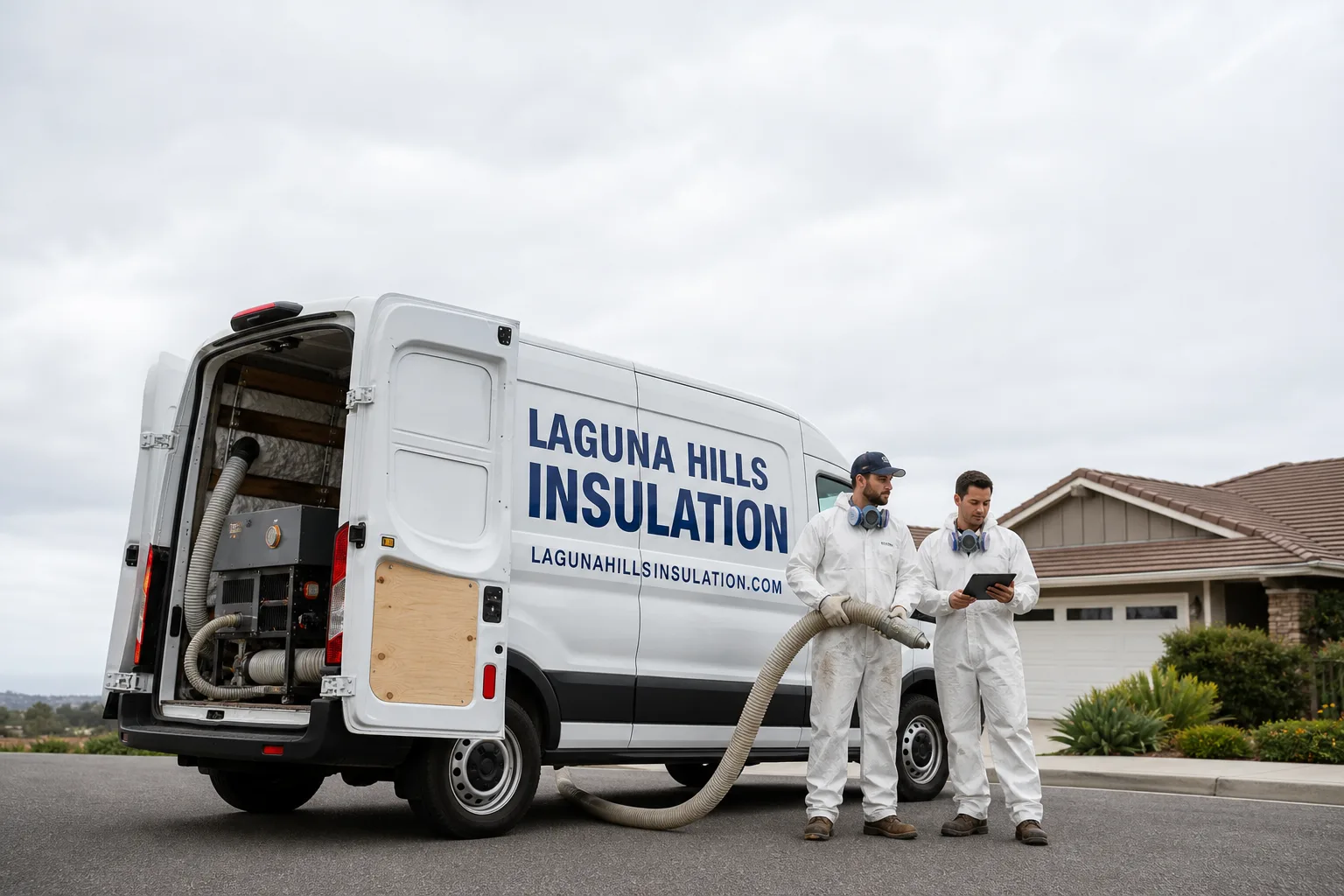
Fast, Reliable Spray Foam Insulation Across Desert Edge
Spray foam insulation in Desert Edge typically runs $2,400 – $6,800 for a full attic application, with most jobs completed in one to two days. The real challenge here isn’t the foam itself – it’s the wind-driven sand that packs into attic vents and penetrations before we ever spray a drop. If you’re noticing dust inside the house, inconsistent room temperatures, or cooling bills that climb every August, your insulation isn’t doing what it should. Call us at (866) 393-6041 and we’ll tell you straight what’s actually going on up there.
We work throughout the 92240 zip code, from the older single-story homes along Dillon Road to the manufactured home communities spread across the open desert lots. Desert Edge’s position on the high-desert rim of the Coachella Valley means our crews deal with conditions you don’t see down in Palm Springs or Desert Hot Springs – fine grit in every penetration, extreme day-night temperature swings, and attics that hit 140°F by mid-afternoon in July. Local knowledge matters here, and our Reflectix service in Desert Edge means we’ve spent enough hours in these attics to know exactly what works and what doesn’t.
Why Laguna Hills Insulation Is Desert Edge’s Preferred Spray Foam Insulation Company
Desert Edge homeowners call us because we don’t push a single product line. Garrett Lund built this company around a material-agnostic approach – we’ll tell you honestly whether open-cell or closed-cell foam fits your situation, and we’ll say so plainly if spray foam isn’t the right call at all. That’s rare in this trade. Most contractors carry one brand and find reasons to recommend it everywhere. We carry eight.
Our crews know the Desert Edge housing stock. We’ve been inside enough mid-century single-story homes and manufactured units out here to recognize the same patterns: settling fiberglass batts, builder-grade attic hatches that were never sealed, and vents packed with wind-blown grit that’s been accumulating for decades. When a Desert Edge customer says their cooling bill spiked or a bedroom won’t hold temperature, we usually know the cause before we even climb the ladder.
Response time matters when the cement-block heat starts radiating through your walls at 5 p.m. We schedule Desert Edge jobs with the understanding that peak summer demand can’t wait three weeks. Most estimates happen within a few days of your call, and installation dates are set around your schedule – not our warehouse inventory. For the full picture of what we do, see our Spray Foam Insulation service details.
Spray Foam Attic Insulation in Desert Edge
Spray Foam Attic Insulation in Desert Edge homes is less about keeping heat in and more about keeping radiant heat out – the summer sun on a dark composite roof can push attic temperatures past 140°F, and that heat radiates down through your ceiling all night long. We apply closed-cell foam directly to the underside of the roof deck, creating an air barrier and a thermal barrier in a single application. That seals off the superheated air before it ever reaches your living space.
Wind-Sand Prep Before Foam Application
Before any spray foam touches a Desert Edge roof deck, we clear the attic of accumulated sand and dust. High-wind events off the open desert push fine grit through soffit vents, gable vents, and every half-inch penetration in the roof. If that grit sits between the foam and the decking, the foam can’t adhere properly. Worse, trapped sand acts as a wicking layer that holds moisture against the wood. Vacuuming and blow-out work happens first – every single time.
Attic Hatch and Penetration Sealing
Builder-grade attic hatches in the newer homes along the Desert Edge perimeter are rarely sealed. The hatch sits there like an open window, letting conditioned air escape into a 140° attic. We seal the top plates, recessed light housings, and vent penetrations with foam or caulk before the main application goes in. Skipping this step defeats half the benefit of the foam itself.
Spray Foam Wall Insulation in Desert Edge
Spray Foam Wall Insulation in Desert Edge matters because exterior walls here face a double assault: direct sun load during the day and rapid heat loss once the desert night drops 40 degrees. Older block-and-stucco homes out here have little to no cavity insulation, and manufactured units often shipped with thin batt material that’s settled years ago. We inject open-cell foam into existing wall cavities where access allows, or apply closed-cell during re-siding and renovation work.
Closed-Cell for Exterior Wall Applications
Closed-cell spray foam from Icynene or Demilec adds structural rigidity to wall assemblies and acts as a vapor barrier – two things fiberglass batts will never do. For Desert Edge homes with stucco exteriors, that vapor control matters because desert rain events can saturate the stucco and wick moisture toward the interior framing. Closed-cell foam stops that path cold.
Open-Cell for Interior Sound and Air Sealing
Interior wall cavities in Desert Edge homes are where open-cell foam earns its keep. It air-seals better than batt insulation and damps sound transfer between rooms – useful when a manufactured home has thin panel walls and every conversation carries. It’s also the more cost-effective option for retrofit work where the cavity is accessible but we’re not fighting exterior moisture.
Trusted Brands We Service in Desert Edge
We install Icynene and Demilec spray foam systems in Desert Edge, and we stock both open-cell and closed-cell product lines so the right material can win the job – not whichever can we have sitting in the warehouse. For homeowners who want options beyond spray foam, we also carry Owens Corning and Johns Manville batt products and GreenFiber cellulose for blown-in applications. That breadth matters when we’re honest enough to tell a Desert Edge customer that spray foam isn’t the right solution for their specific home. We’re not selling you a brand; we’re installing what actually performs in your walls and roof. See what else we offer across Spray Foam Insulation in Desert Edge.
Common Spray Foam Insulation Problems We See in Desert Edge Homes
- Sand-clogged attic vents. High-desert winds push fine sand through soffit and gable vents, blocking airflow and leaving a layer of grit across existing insulation. This kills the R-value of whatever’s up there and must be cleared before any foam work begins.
- Unsealed attic hatches and recessed lights. Builders rarely seal these openings, and in Desert Edge’s temperature extremes, conditioned air pours out through them year-round. The spray foam can’t compensate for a hole in the ceiling plane.
- Foam delamination from extreme temperature swings. Desert Edge’s 40-plus-degree daily temperature swing causes roof decking to expand and contract. If surfaces aren’t clean and dry before application, the foam can separate from the deck over time. Surface prep isn’t optional here.
- Settled blow-in insulation in manufactured homes. Older manufactured units in the 92240 area often have blown-in material that’s compacted over decades, especially along exterior wall edges where wind-driven dust has filtered in. Top-up or full removal and re-foam are the usual fixes.
Pricing for Spray Foam Insulation in Desert Edge, CA
A typical spray foam attic job in Desert Edge runs $2,400 – $6,800 depending on square footage, roof pitch, and how much sand-clearance prep work is required. Wall injection work ranges $1,800 – $4,200 for a single-story home’s exterior cavities. Closed-cell from Icynene or Demilec costs more than open-cell – roughly double per board foot – but it adds structural strength and acts as its own vapor barrier. Open-cell is the practical choice for interior walls and accessible attics where moisture control isn’t the priority. Every estimate is free, and we’ll itemize the prep work separately so you see exactly what the sand removal and air sealing costs versus the foam itself. Call (866) 393-6041 for a walkthrough and exact numbers for your home.
We Also Serve Cities Near Desert Edge
Beyond Desert Edge, our crews work regularly in Desert Edge surrounding communities: Garnet, Desert Hot Springs, Morongo Valley, and Palm Springs. Each has its own microclimate and housing quirks, and we adjust our prep work accordingly. If you’re in any of these areas and want a straight answer on insulation, call us at (866) 393-6041.
Serving Desert Edge, CA — Our Local Coverage Area
We’re based in the Desert Edge area and know this community well. Use the map below to see our service coverage — if you’re nearby, we can almost certainly help.
FAQs About Spray Foam Insulation in Desert Edge
Sand must be cleared from attic surfaces and penetrations before foam application, because grit between the foam and the roof deck prevents proper adhesion and traps moisture against the wood. Desert Edge’s open-desert wind events push fine material through every vent and gap, and our crews vacuum and blow out the attic before a drop of foam goes down. Call us at (866) 393-6041 and we’ll explain exactly what your attic looks like and what it needs.
Yes – air sealing the attic penetrations and rim joists blocks the same pathways that carry wind-blown dust into your living space. On a 1990s single-story off Dillon Road, we found the attic hatch and soffit vents clogged with sand that had settled over the fiberglass batts and rendered them useless. After vacuuming, sealing, and applying Icynene foam to the roof deck, the homeowner reported holding 8°F cooler afternoons and noticeably less dust inside. Air sealing is the first step, and it works.
Closed-cell spray foam handles the thermal swing by creating an air barrier that stops both radiant heat gain in summer and heat loss during those near-freezing winter nights. The roof deck expands and contracts with the temperature swing, which is why proper surface prep and clean application matter more in Desert Edge than in milder climates. Without that prep, the foam can delaminate. With it, you get a continuous thermal barrier that works in both directions.
It can be, but it depends on the specific unit and where the access points are. Many manufactured homes in the 92240 area have under-insulated floors and roof cavities that aren’t easily reachable, so we may recommend blown-in GreenFiber cellulose for some cavities and spray foam for others. We’ll tell you honestly if foam isn’t the right tool for your particular floor plan. A free inspection at (866) 393-6041 gets you a straight answer.
We install Icynene and Demilec spray foam systems, both open-cell and closed-cell, and we choose between them based on your home’s specific exposure and moisture profile. Icynene’s closed-cell product is our default for Desert Edge roof decks where structural strength and vapor control matter; Demilec’s open-cell often fits better in interior wall cavities and sound-dampening applications. Both are top-tier manufacturer lines, and we stock enough of each to keep Desert Edge projects moving without waiting on supply orders. Estimates are free – call (866) 393-6041 to schedule yours.
Written by Garrett Lund, Owner at Laguna Hills Insulation, serving Desert Edge and the surrounding Coachella Valley communities. For a free estimate, call (866) 393-6041.