
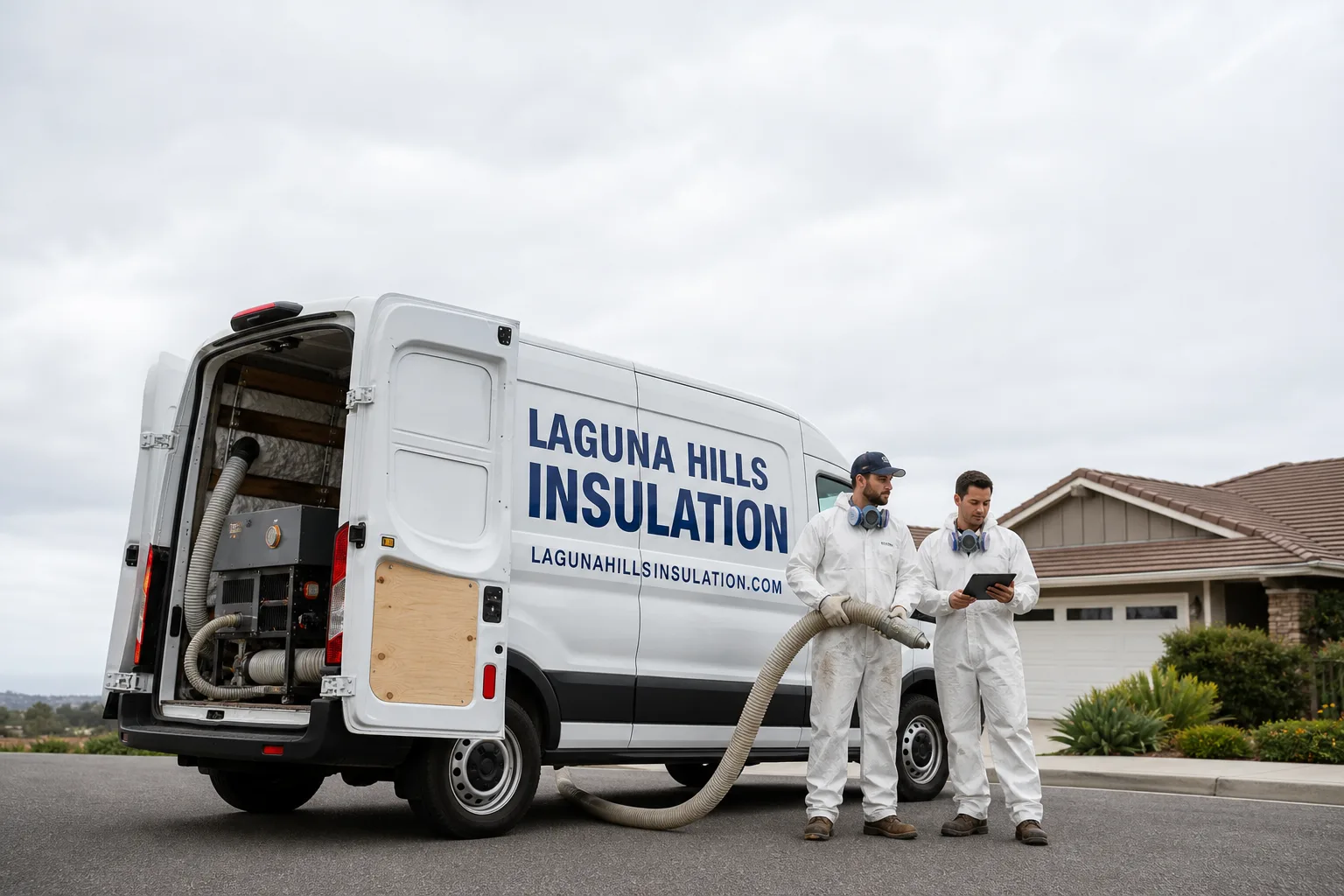
Fast, Reliable Attic Insulation Across South Gate
Attic insulation in South Gate pays for itself faster than almost any other home improvement, and in this ZIP code, the math is especially clear. Homes across 90280 were mostly built between 1940 and 1965, which means many attics still have either nothing up there or a thin layer of fiberglass that’s done its job for sixty years and quit. We run crews into South Gate weekly from our Laguna Hills shop, and we know exactly what these post-war stucco boxes need. Call (866) 393-6041 and we’ll give you a straight answer on what your attic actually requires, not a sales pitch for whatever material we’re trying to move that month.
Key Takeaways for South Gate Homeowners
- Most South Gate attics from the 1940s-1960s have R-11 or less. Current code calls for R-38 to R-49 in this climate zone.
- Radiant barriers are unusually effective here because of South Gate’s dense post-war grid: afternoon sun bakes low-slope roofs and turns kneewalls into heat radiators.
- You don’t always need a full replacement. Attic insulation top-up over existing material runs $1.50-$2.50 per square foot in South Gate; full replacement with air sealing runs $3.50-$6.00 per square foot.
- Original lath-and-plaster ceilings in these homes crack and leak air. We address that before we bury it under new insulation.
Why Laguna Hills Insulation Is South Gate’s Preferred Attic Insulation Company
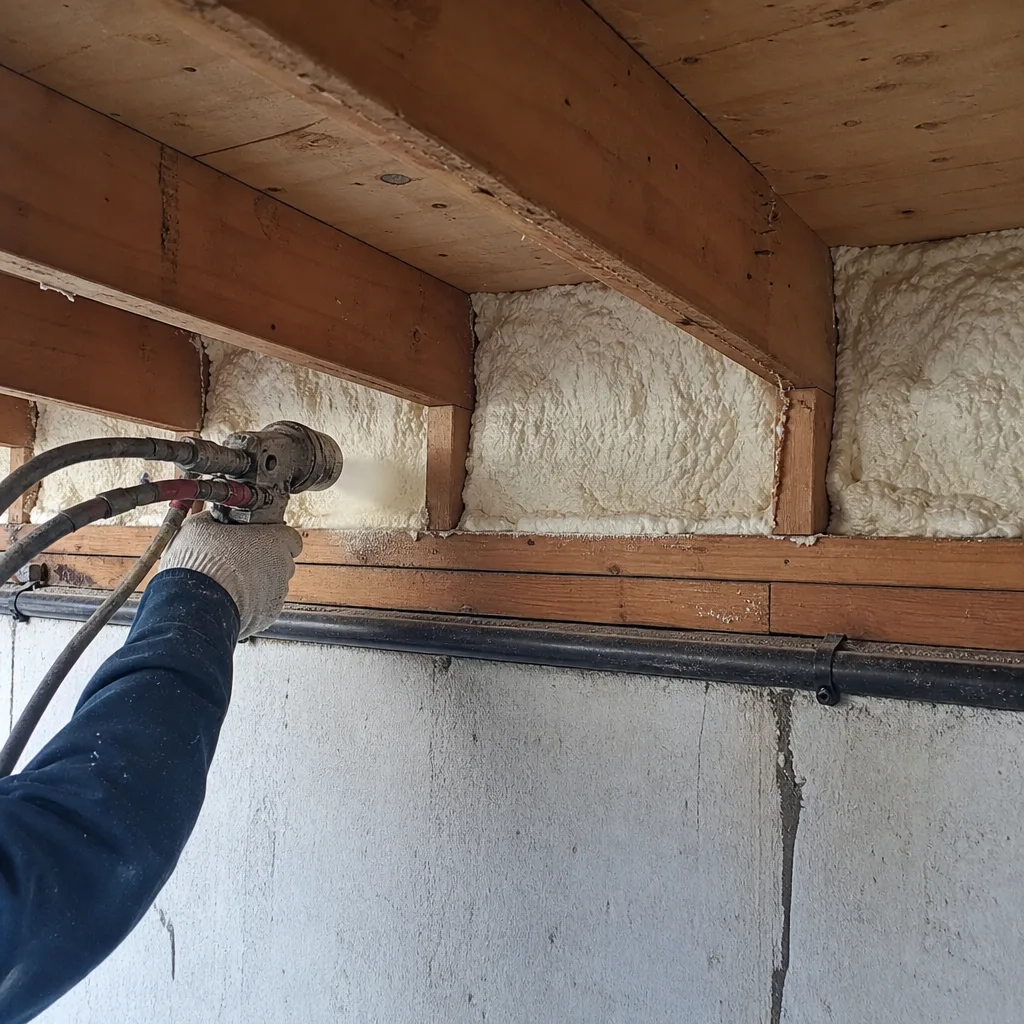
Garrett Lund started this company with one rule: stock enough material options that the right product wins the job, not the easiest one to install. That matters in South Gate more than in most cities, because these homes have specific needs that a one-product contractor can’t fix properly. We carry eight manufacturer brands: Owens Corning, Johns Manville, Knauf, Rockwool, CertainTeed, Icynene, Demilec, and GreenFiber. That means when a homeowner off Tweedy Boulevard needs fire-resistant mineral wool in a kneewall, we install Rockwool. When someone on Firestone Boulevard needs an air-sealing spray foam system, we install Icynene or Demilec. When a South Gate landlord needs the most cost-effective cellulose top-up, we blow in GreenFiber. Most crews in Southeast LA County pick from one catalog. We don’t.
We’ve worked enough South Gate attics to know what’s up there before we even climb the ladder. These tract homes share identical framing layouts, which means we can predict where the air leaks are, where the kneewalls sit, and how much headroom you have in a low-slope hip roof. That familiarity means we price jobs accurately and finish them on schedule. Our crews respond to South Gate service calls same-day when we have availability, and we don’t charge extra for a quote.
Radiant Barrier in South Gate
Radiant barrier is the single most effective upgrade for a South Gate attic, because this city’s post-war homes sit tight to the street grid, soak up the afternoon sun, and turn uninsulated kneewalls into heat radiators by 3 p.m. A radiant barrier stapled to the underside of the roof deck reflects that heat before it ever enters the attic. In South Gate’s hot, dry summer pattern, this can drop attic temperatures by 20 to 30 degrees, which directly reduces the heat load on the rooms below. Homeowners along Firestone and Tweedy often compare notes on this exact retrofit, because the tract layouts are so uniform that what works on one house works on the one next door.
Radiant barrier installation in South Gate runs $1.25 to $2.75 per square foot of roof area, depending on whether the attic is accessible, whether we’re adding baffles for ventilation, and whether existing insulation needs to be moved or replaced first. A typical 1,100-square-foot South Gate bungalow lands between $1,400 and $3,000 for the complete job.
Radiant Barrier With Baffles
Low-slope and hip roofs dominate South Gate, and they leave very little clearance at the eaves. When we install a radiant barrier without addressing ventilation, we can trap moisture against the roof deck during those marine-layer nights. We install baffles at every rafter bay before stapling the radiant barrier, so air keeps moving from the soffits to the ridge. On a 1948 stucco bungalow off Firestone Boulevard, our crew found zero insulation and kneewalls radiating so much heat that the back bedroom was unusable by mid-afternoon. We installed an Owens Corning radiant barrier across the roofline, blew in GreenFiber cellulose to R-38, and air-sealed the top plates. The homeowner told us that bedroom finally stayed cool past 2 p.m. without the window unit running.
Radiant Barrier Over Existing Insulation
If your South Gate attic already has blown-in insulation but still feels hot, the problem is likely radiant heat, not conductive heat. We can leave your existing insulation in place and add a radiant barrier above it. This is the most cost-effective upgrade for minimally cooled homes where the attic floor is already insulated but the sun still turns the upper rooms into an oven. We check for electrical hazards and recessed light clearances before any barrier goes in.
Attic Cleaning Services in South Gate
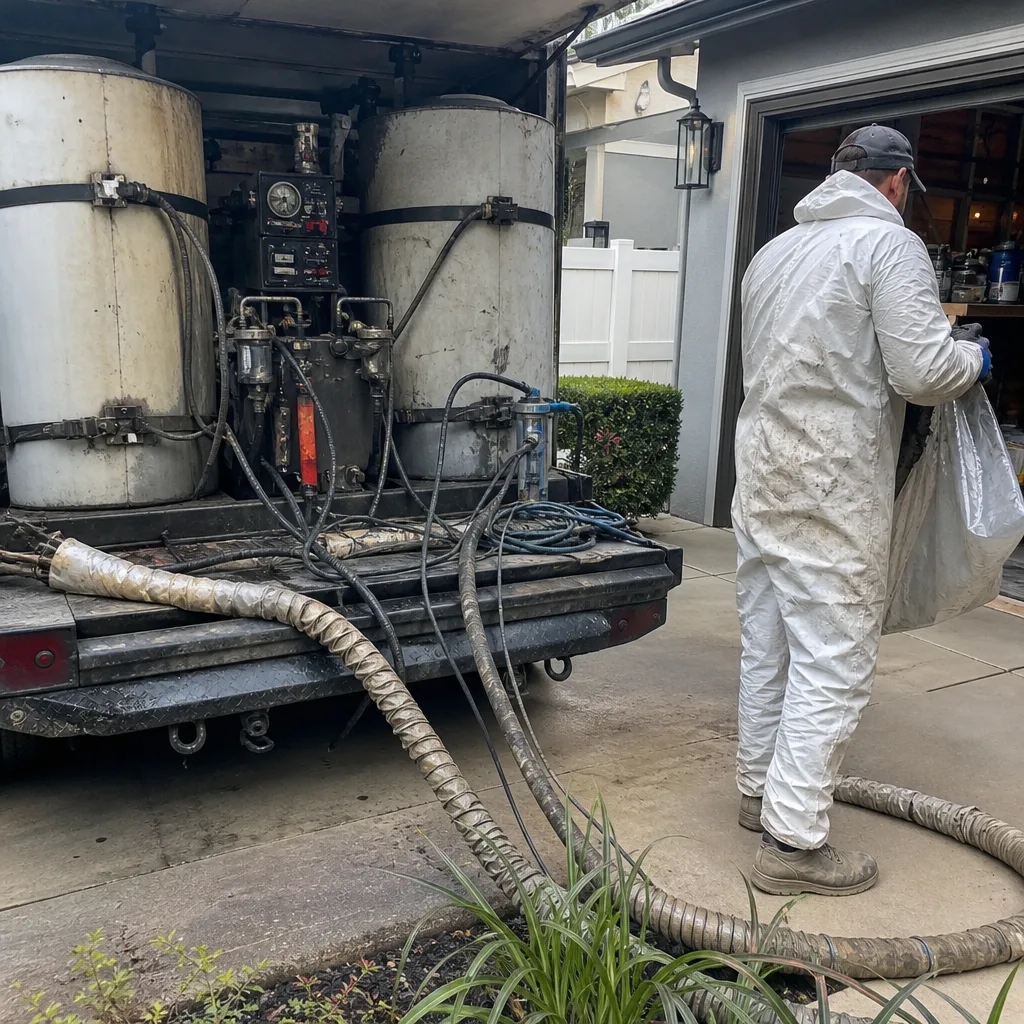
Attic cleaning services in South Gate often come first, because sixty years of dust, rodent activity, and degraded insulation don’t just disappear under a new layer of blown-in fiberglass. These older homes rarely had proper attic access or sealing, which means dust from the nearby industrial corridors settles in attics, and old insulation compacts into a mat that stops doing its thermal job. Cleaning is the step most contractors skip because it’s dirty, slow work. It’s also the step that makes new insulation perform the way its R-value says it should.
Attic cleaning in South Gate runs $1.00 to $2.00 per square foot, and the price includes removal of old insulation, vacuuming, and sanitation. A typical 1,000-square-foot attic lands between $1,000 and $2,000. If the attic has rodent contamination, that’s a bigger job and we’ll quote it separately after we see the extent of it.
Clean Before You Top Up
If your existing insulation is mostly intact but dirty, a top-up without cleaning can seal in dust and allergens and leave you with a fresh layer hiding an old problem. In South Gate homes with original lath-and-plaster ceilings, we often find old batts crushed under decades of stored boxes, with the tops of the ceiling joists exposed and leaking air. We clean, air-seal, and then top up to R-38 or R-49, depending on what your roof framing can handle.
Full Removal For Contamination
When rodents or a roof leak have contaminated a South Gate attic, no amount of new insulation fixes the underlying issue. We do full removal, treat the surface, and install fresh material. This is also the right moment to add a radiant barrier, since the attic is open and accessible. The marginal cost of adding a barrier during a full cleanout is lower than doing it as a separate job later.
What happens when you call
- 1
A real person answersNo phone trees — you reach a local pro.
- 2
You get an upfront price rangeHonest numbers before anyone is dispatched.
- 3
A background-checked tech heads outLicensed & insured, dispatched right away.
- 4
You approve before work beginsNothing starts until you say go.
Trusted Brands We Service in South Gate
We stock and install Owens Corning fiberglass, Johns Manville batts, Knauf rolls, and Rockwool mineral wool, and we keep enough inventory on hand to start most South Gate jobs within a few days. When a homeowner needs a specific product, like Rockwool for a kneewall that faces the afternoon sun, we don’t have to special-order it from a distributor and wait a week. That’s the difference between a generalist who can get it eventually and a specialist who already has it. Garrett Lund built this company around the idea that eight brands and three installation methods under one roof means the right material wins, not the most convenient one.
Common Attic Insulation Problems We See in South Gate Homes
- Uninsulated kneewalls turning bedrooms into ovens. Post-war tract layouts in South Gate put bedrooms on the west and southwest corners, where the afternoon sun hits the wall directly. The kneewall behind those rooms gets scorching hot, and with no insulation behind it, the drywall radiates heat into the room all evening.
- Lath-and-plaster ceilings leaking air. Original plaster in 1940s and 1950s homes cracks and separates from the framing over time. We air-seal those gaps from the attic side before we insulate, which stops the cool marine-layer air from escaping at night and the hot air from infiltrating during the day.
- Low-slope roofs leaving no room for ventilation. Hip roofs and low-slope framing in South Gate attics can trap heat and moisture. We address this with baffles before any insulation application, especially when a radiant barrier is going in.
- Compacted old insulation that’s lost its R-value. Fiberglass batts from the 1960s flatten under their own weight and stop trapping air. A top-up over compacted material won’t bring the assembly back to code. We evaluate what’s there and tell you honestly whether to top it or replace it.
Pricing for Attic Insulation in South Gate, CA
The numbers we give you are real ranges for this city’s market, not placeholder figures. Attic insulation top-up in South Gate runs $1.50 to $2.50 per square foot. Full replacement with air sealing runs $3.50 to $6.00 per square foot. Radiant barrier installation runs $1.25 to $2.75 per square foot of roof area. Attic cleaning runs $1.00 to $2.00 per square foot. Blown-in cellulose or fiberglass to R-38 in a typical 1,100-square-foot South Gate home runs $2,200 to $4,800, depending on whether we’re topping up or starting from bare ceiling joists. Materials, access difficulty, and whether the attic needs cleaning first all move the final number. Call (866) 393-6041 for a free estimate, and we’ll give you a firm price before any work starts.
We Also Serve Cities Near South Gate
South Gate is the center of our Southeast LA County service area, but we run crews through South Gate and into the surrounding communities every week. Homeowners in Lynwood, Huntington Park, Walnut Park, and Bell call us for the same post-war attic problems: scorching heat, cracked plaster, and insulation that’s long past its service life. Our Attic Insulation team covers the whole corridor with the same material breadth and the same straight answers.
Serving South Gate, CA — Our Local Coverage Area
We’re based in the South Gate area and know this community well. Use the map below to see our service coverage — if you’re nearby, we can almost certainly help.
FAQs About Attic Insulation in South Gate
Expect us to start with air sealing. In a 1950 South Gate home, the top plates of the wall framing, the plumbing penetrations, and the gaps around the chimney or flue all leak air, and sealing them is a separate step before any insulation goes in. Then we’ll assess your roof framing and ceiling condition. If you have original lath-and-plaster, we work carefully from the attic side so we don’t disturb the plaster keys. The actual installation takes one day for a typical bungalow, and the temperature difference in the bedrooms is usually noticeable that same evening. Call (866) 393-6041 and we’ll walk you through your specific layout.
It helps more in South Gate than in almost any other city in the county, because the housing stock is so uniform and so sun-exposed. These low-slope roofs and tight street grids get hammered by afternoon sun, and a radiant barrier reflects that heat before it enters the attic. It’s not overkill if your bedrooms bake every summer afternoon. If your attic already has good insulation and you still feel radiant heat coming through the ceiling, a radiant barrier is the next logical step.
Look for three signs. First, if you can see the tops of the ceiling joists poking through the insulation, it’s compacted and doing very little. Second, if you’ve had rodents, the insulation is contaminated and should come out entirely. Third, if your ceiling feels dusty or your allergies spike when the AC runs, the attic air is leaking into the house. Cleaning and replacing costs more than a top-up, but it’s the only honest fix for a sixty-year-old attic. We’ll tell you which one you need, even when the cheaper option would be easier for us to sell.
Yes. We work in original lath-and-plaster homes regularly, and we know how to do it without cracking the ceiling. The key is working from the attic side and avoiding any vibration against the plaster keys. For walls, we typically don’t recommend blow-in insulation through plaster unless the wall cavities are accessible and dry. For attics, there’s no problem at all: we seal, blow in, and leave the plaster untouched. The plaster cracks we see in South Gate are usually from decades of thermal cycling, not from insulation work done carefully.
We install Owens Corning and Johns Manville fiberglass, Knauf batts, Rockwool mineral wool, and GreenFiber cellulose, and for spray foam we use Icynene and Demilec. All of these work in South Gate’s semi-arid coastal climate when installed correctly. The material choice depends on your roof framing, ventilation, budget, and whether you need air sealing plus insulation or just thermal bulk. For open-vented attics with good baffles, blown-in cellulose from GreenFiber is a strong, cost-effective choice. For kneewalls that bake in the western sun, Rockwool’s density and fire resistance make it worth the extra cost. We’ll tell you which one fits your house, not which one we’re trying to clear off the shelf. Call (866) 393-6041 to talk it through.
Written by Garrett Lund, Owner at Laguna Hills Insulation, serving South Gate’s post-war homes with full-method attic insulation expertise.