
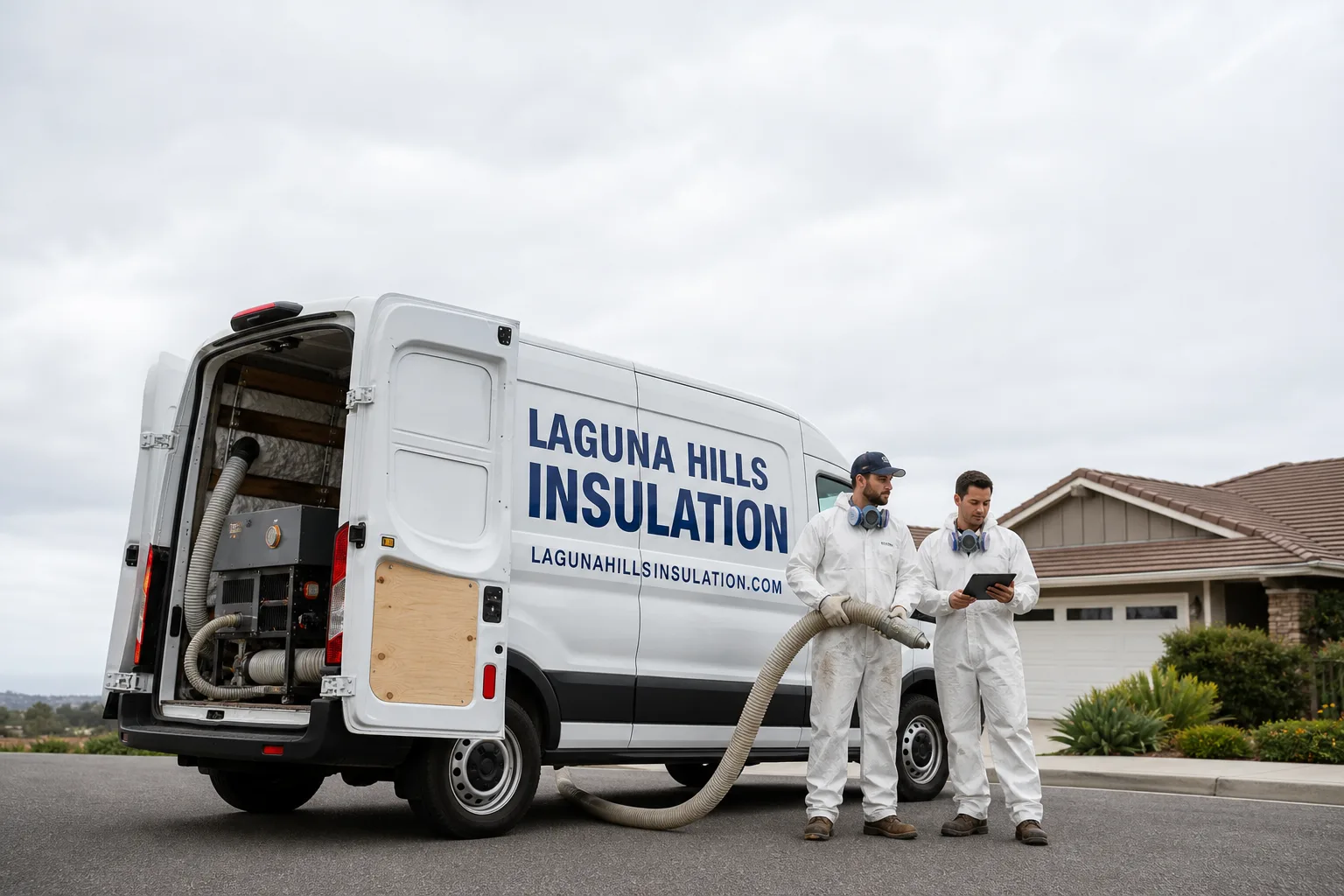
Fast, Reliable Attic Insulation Across Northridge
Attic insulation in Northridge isn’t a luxury add-on. It’s the difference between a house that holds temperature and one that fights the San Fernando Valley heat every afternoon from June through October. We work throughout 91327, 91328, 91329, and 91330, and we know exactly what these tract homes and CSUN-area condos need. Garrett Lund built Laguna Hills Insulation around a material-agnostic approach: eight manufacturer brands, three installation methods, and honest recommendations based on your attic’s actual condition, not our inventory. Call (866) 393-6041 and we’ll tell you what’s actually going on up there.
Why Laguna Hills Insulation Is Northridge’s Preferred Attic Insulation Company
Northridge homeowners have a particular reason to be skeptical of insulation contractors. After the 1994 earthquake, a lot of repair work got rushed. Insulation that shifted or compressed during the shaking was often left in place, covered over with drywall, and forgotten. We see the results every week: attics in 91325 and 91324 that look fine from the hatch but hide R-7 batts where R-30 or better should sit. That’s why our Attic Insulation team always inspects before quoting, not after. The right fix for a Northridge attic often starts with removal, not just a top-up, and we’ll tell you that straight.
We stock and install across the full material spectrum: fiberglass from Owens Corning and Johns Manville, mineral wool from Rockwool, spray foam from Demilec and Icynene, and cellulose from GreenFiber. Most local crews push one product line. We’ll put closed-cell foam in a knee wall if that’s what the framing needs, and blown-in cellulose across the flat attic floor if that’s the smarter thermal move. Northridge’s housing stock varies enough that no single product covers every home, and we’re set up to match the material to the problem.
Attic Mold Removal in Northridge
Attic mold removal in Northridge usually traces back to one of two problems: a bathroom fan vented into the attic, or a roof leak that’s been soaking insulation for months before anyone noticed. We remove mold-contaminated insulation, treat the affected framing, and address the ventilation or moisture source so it doesn’t return. Most Northridge attics are too hot and dry for mold to thrive on its own, so when we find it, there’s almost always a moisture source that someone missed. A typical mold removal scope with insulation replacement runs $1,800 to $4,200 depending on attic size and how far the growth has spread.
What We Do Before Treating Mold
The first step is finding the moisture source. We check bath fan ducts, roofline flashing, and gable or soffit venting before removing anything. Treating mold without fixing the moisture is a temporary repair, and Northridge’s dry climate can mask small leaks until winter rains hit.
The Removal Process
Contaminated insulation comes out first. Then we treat the affected roof decking and trusses, air-seal any openings, and install fresh insulation matched to the existing R-value. If the mold source was a vented bathroom fan, we’ll reroute it through the roof before new material goes in.
Attic Insulation Removal in Northridge
Attic insulation removal in Northridge is more common here than almost anywhere else in the Valley. The earthquake didn’t just crack stucco; it shifted whole layers of batt insulation inside wall cavities and attic floors. We routinely pull out fiberglass that’s compressed to R-7 or less, dust-choked from decades under a hot roof deck, and no longer doing its job. Removal costs in Northridge typically run $1.50 to $3.00 per square foot for standard attic access, with tighter attics or heavy contamination pushing toward the upper end. Homeowners in 91324 and 91325 with original 1950s – 1970s batts should plan for removal, not just a top-up.
Signs Your Attic Insulation Needs to Go
Crumbling or compressed batts, rodent activity, water staining, and old insulation that’s packed down to a sliver of its original loft all point to removal. If your attic insulation has been in place since before 1994 and was never inspected after the earthquake, it’s worth checking what shifted.
Removal Before a Top-Up
You can’t blow new insulation over failed old insulation and expect it to perform. The compressed material underneath still blocks airflow and traps heat. On any Northridge home we suspect has post-earthquake insulation damage, we inspect first and remove what’s failed before adding new material. Skipping that step is how attics end up with R-19 ratings that behave like R-9.
Trusted Brands We Service in Northridge
We work with eight manufacturer lines so the material earns its place. In Northridge attics, we lean on GreenFiber cellulose for open-blow attic floors because it settles into odd framing cavities left by post-earthquake repairs, and Owens Corning fiberglass batts for knee walls where a dense, paper-faced product makes more sense. Demilec spray foam comes into play for unvented attics and stubborn air gaps that nothing else seals. We don’t carry just one brand because Northridge’s housing mix won’t let us. The right insulation for your home isn’t always the easiest one to install.
Common Attic Insulation Problems We See in Northridge Homes
- Earthquake-compressed batts: Original insulation in 1950s – 1970s tract homes that shifted during the 1994 quake and was never re-secured. We find R-7 where R-30 should be, and the only real fix is removal.
- Radiant heat gain through unshielded roof decks: Summer highs over 100°F turn thin attic insulation into a heat sink that radiates into living spaces. This is why a radiant barrier or higher R-value pays off faster in Northridge than in coastal LA.
- Santa Ana ember exposure: Wind-driven embers from hillside wildfires can reach attics through gable and eave vents. Fire-resistant insulation like mineral wool, plus proper vent screening and air-sealing, reduces that exposure.
- Uninsulated knee walls: Many two-story Northridge homes have attic knee walls with no insulation at all, creating hot zones that push AC systems into overdrive every afternoon.
Pricing for Attic Insulation in Northridge, CA
Blown-in attic insulation in Northridge typically runs $1,200 to $2,800 for a standard 1,200 to 1,800 square foot attic, depending on R-value target and what’s currently up there. A top-up over acceptable existing insulation costs less, usually $800 to $1,600. Full removal and replacement ranges $3,000 to $6,500 when we’re pulling out failed or contaminated material first. Batt insulation for knee walls and accessible areas lands between $1,000 and $2,200. Attic mold removal adds $1,800 to $4,200 depending on scope. Every estimate is free, and we’ll show you exactly what you’re paying for before any work starts. Call (866) 393-6041.
We Also Serve Cities Near Northridge
Our crews work throughout the San Fernando Valley, including North Hills, Encino, Van Nuys, and Valley Glen. If you’re nearby and wondering whether your attic has post-earthquake insulation damage or just needs a top-up, we cover the full Northridge area and surrounding communities with the same inspection-first approach.
Serving Northridge, CA — Our Local Coverage Area
We’re based in the Northridge area and know this community well. Use the map below to see our service coverage — if you’re nearby, we can almost certainly help.
FAQs About Attic Insulation in Northridge
The earthquake shook batt insulation out of position in thousands of Northridge attics, and the repair work that followed often focused on visible structural damage rather than what was hidden above the ceiling. Compressed or shifted batts were simply covered over and forgotten. If your home hasn’t had an attic insulation inspection since 1994, there’s a good chance the R-value you think you have isn’t what’s actually up there. Call (866) 393-6041 and we’ll check.
It can. Attics with degraded insulation, open eave gaps, and unscreened vents give wind-driven embers more pathways into the structure. Fire-resistant insulation materials like mineral wool, combined with proper air-sealing and vent screening, reduce the combustible surface area and slow fire spread. This is a real concern for homes near the Santa Susana foothills and other open areas around Northridge.
If the existing insulation is compressed, water-damaged, rodent-infested, or hasn’t been inspected since before 1994, removal is usually the right call. A top-up only works when the base layer is intact and performing. We’ll inspect before we quote, and we’ll tell you honestly if removal is required or if adding material over the existing layer will do the job.
For most Northridge attics, R-38 to R-49 is the practical target for blown-in cellulose or fiberglass, and R-30 is the floor for batt insulation in standard framing. Northridge’s 100°F summer highs make high-R attic insulation more impactful than in coastal LA, and a radiant-barrier layer multiplies the benefit by reflecting heat before it reaches the insulation in the first place.
Title 24 sets minimum insulation requirements for any re-roofing or major remodel in Northridge, and some post-earthquake retrofit scopes incorporated insulation and air-sealing provisions. If you’re planning a roof replacement or opening up an attic for any reason, current code will likely require bringing insulation up to standard. We’re familiar with what Northridge inspectors expect and can help you plan for it.
Ready to find out what’s really in your Northridge attic? Call (866) 393-6041 for a free, inspection-first estimate. We’ll show you the problem before we quote the fix.
Written by Garrett Lund, Owner at Laguna Hills Insulation, serving Northridge and the San Fernando Valley.