
Icynene Attic Insulation in Laguna Hills: A Homeowner’s Guide
Icynene is an open-cell spray foam that insulates and air-seals in one pass, and installed cost in Laguna Hills typically runs $2.75 to $4.25 per board foot for the open-cell formula. It performs best on the underside of a roof deck when you want the attic inside the conditioned envelope. It is frequently the wrong call when blown onto a ventilated attic floor, where cellulose or fiberglass delivers more R-value per dollar. If you’re weighing Icynene against other materials and want a straight answer based on your house rather than a product pitch, call (866) 393-6041 and we’ll walk you through the numbers.
Here’s the thing most Icynene marketing skips: open-cell foam is vapor-permeable by design, and in a hot-dry climate like south Orange County, that permeability can work against you if the foam lands on the wrong surface. Knowing where it pays off and where it doesn’t is the difference between a great insulation investment and an expensive re-do.
This guide is written by the crew at Laguna Hills Insulation home, and we install Icynene alongside Owens Corning, Demilec, GreenFiber, and a handful of other brands. We’ll be the first to tell you when Icynene isn’t the answer.
Key Takeaways
- Icynene open-cell foam delivers about R-3.7 per inch; closed-cell runs R-6.5 to R-7 per inch.
- Open-cell is vapor-permeable, which matters in specific attic configurations but can cause moisture issues in others.
- Icynene earns its price on unvented roof decks and cathedral ceilings, not ventilated attic floors.
- Installed cost for a 1,800 sq ft attic runs roughly $4,950 to $7,650 for open-cell, versus $2,700 to $4,500 for blown cellulose.
- The contractor recommending Icynene should be able to explain your attic’s moisture drive direction. If they can’t, get a second opinion.
What Icynene Actually Is, Technically Speaking
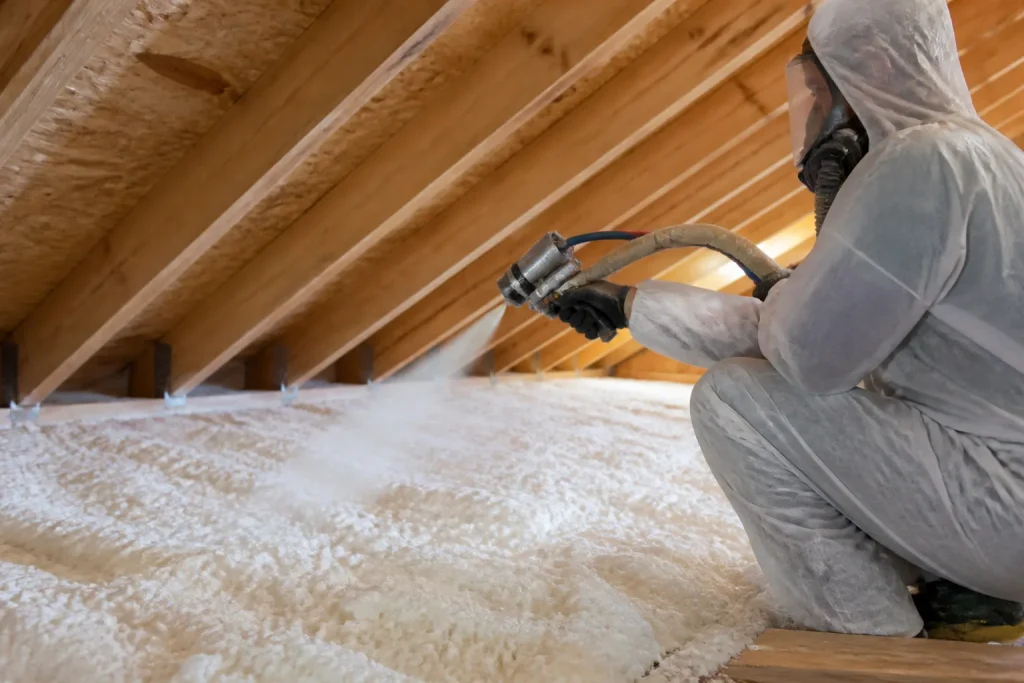
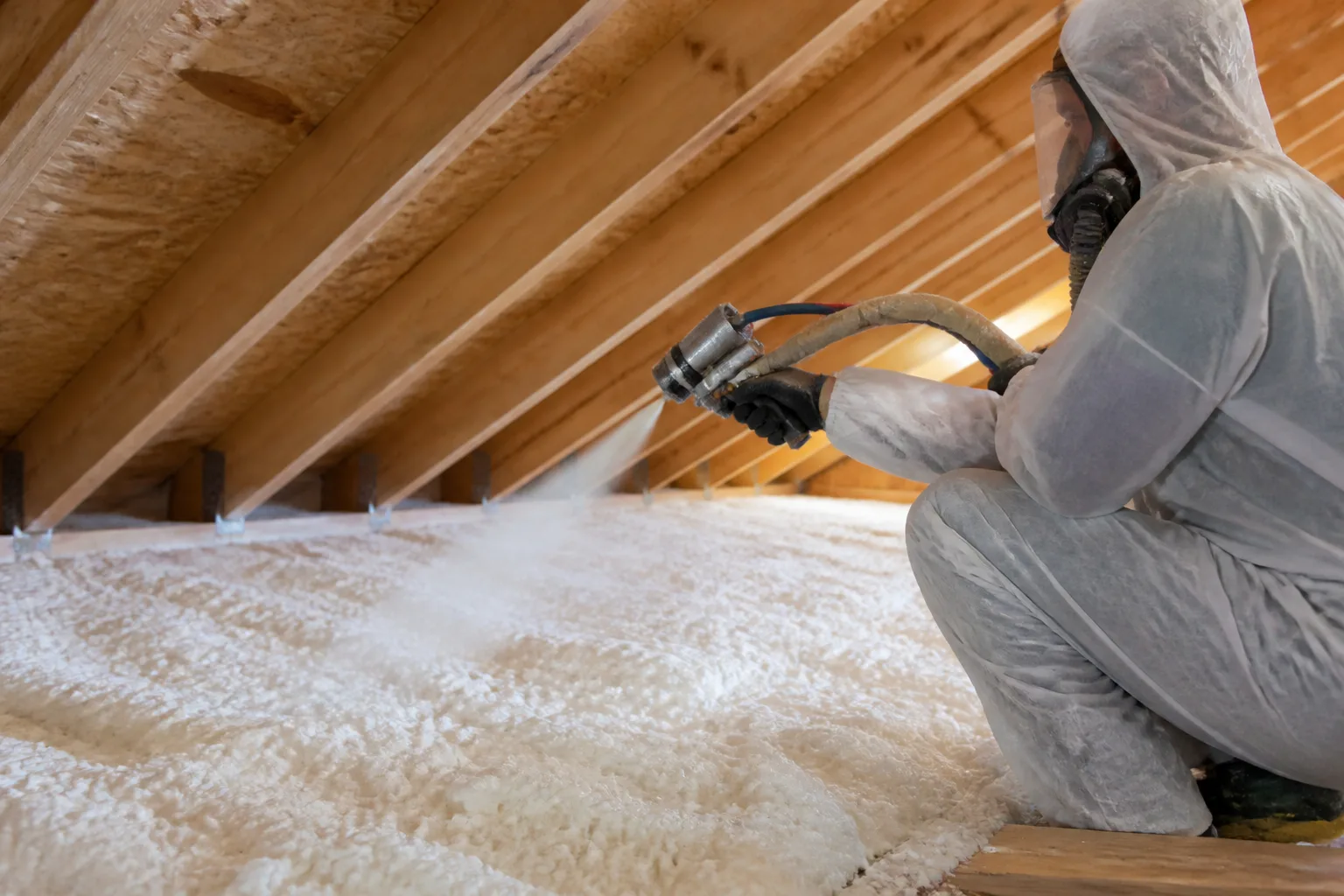
Icynene is the brand name for a family of spray-applied polyurethane foams. The product most homeowners encounter is Icynene Classic (sometimes labeled Classic Max or ProSeal depending on vintage), which is an open-cell, low-density foam. It expands roughly 100 times its liquid volume on application, fills stud and rafter bays completely, and cures to a soft, spongy texture you can compress with a finger.
Open-cell foam gets its name from the millions of tiny air pockets that remain open to each other after curing. This is why the R-value lands around R-3.7 per inch, versus the R-6.5 to R-7 per inch of closed-cell foam like Demilec’s products. The trade-off is air sealing: open-cell at full depth in a 2×10 or 2×12 rafter bay effectively stops convective air movement, which is often a bigger thermal leak than conduction through the framing itself.
In Laguna Hills attics where the roof deck gets direct afternoon sun, thermal bridging through the rafters is a real problem. Open-cell foam encases the framing and reduces that bridging, but you need enough depth to hit code minimums. At R-3.7 per inch, hitting R-38 in a 2×8 bay means adding rigid board or furring down the rafters. Closed-cell hits that same total in half the space.
Why the R-Value Gap Matters More Than You Think in Laguna Hills
The reason we keep coming back to R-value per inch is simple: attic geometry in this part of Orange County often limits your available depth. Homes in Nellie Gail Ranch, Moulton Ranch, and the older tracts near Moulton Parkway frequently have shallow rafter bays, knee walls, or cathedral ceilings where every inch of cavity depth counts.
If you’re deciding between Icynene open-cell and a closed-cell product like Demilec, run the math on your framing first. A 2×8 rafter bay gives you roughly 7.25 inches of depth. Open-cell fills that space and delivers about R-26. Closed-cell at the same depth delivers R-47. California Title 24 calls for R-22 to R-38 at the roof deck depending on climate zone and assembly type, so open-cell passes code in most cases, but a homeowner chasing true high-performance numbers will feel the difference on their energy bill every August.
Where open-cell does shine is in air-sealing performance per dollar, especially on irregular surfaces. In our experience pulling old batt insulation out of Laguna Hills attics, we regularly find fiberglass batts installed in the 1980s that have slumped, leaving a 2-inch air gap at the top of the rafter bay. That gap moves more heat than the insulation stops. Icynene eliminates that failure mode because it adheres to the surface and never settles.
Where Icynene Performs Best: Unvented Roof Decks and Cathedral Ceilings
The highest and best use of Icynene open-cell in a Laguna Hills home is on the underside of a roof deck in an unvented attic assembly. When you spray open-cell directly against the roof sheathing and close off the soffit and ridge vents, you bring the attic inside the home’s thermal boundary. This matters a lot in Laguna Hills because so many HVAC systems and ducts live in the attic.
Duct leakage in a vented attic costs homeowners 20 to 30 percent of their cooling energy, and that’s not a made-up round number; it’s the range that comes up in energy audits, and it’s the driving force behind moving ducts into conditioned space. When the attic floor is insulated and vented but the ducts live above that insulation, the attic hits 130 degrees in July and your air-conditioned air is traveling through a convection oven. Icynene on the roof deck changes the entire equation, because the attic itself never gets hotter than the living space below.
Cathedral ceilings are the other strong case. There’s no attic floor to insulate, so the only thermal boundary is the roof deck itself. Icynene applied between the rafters seals the plane and insulates in one application, no ventilation baffles required, no vent chutes to install, no air gap to maintain. That’s a clean, effective assembly when done correctly.
If you’re finishing an attic into a bonus room or home office, Icynene on the roof deck is often the most practical route. We’ve done this in homes above the hills near Aliso and Wood Canyons, and the difference in that upstairs room temperature is immediate.
Where Icynene Is a Mistake: Ventilated Attic Floors
The most common misapplication we see, and the reason this guide exists, is Icynene sprayed onto the floor of a ventilated attic. Let’s be direct: that’s usually the wrong call.
On a ventilated attic floor, you want bulk thermal resistance per dollar. The attic is already outside the conditioned envelope, so air sealing matters less than raw R-value. For an 1,800 square foot attic floor with 2×10 joists, filling to R-38 with Blown In Insulation in Canyon Lake dense-packed cellulose from GreenFiber runs roughly $2,700 to $4,500 installed, including air sealing the top plates and penetrations. Icynene open-cell at the same R-38 runs between $4,950 and $7,650. You’ve spent nearly double for a product that has no meaningful performance advantage sitting on a vented floor.
On top of that, the vapor permeability of open-cell foam becomes a complication rather than a feature when it’s touching a drywall ceiling below. Open-cell doesn’t stop vapor. If your ceiling has any air leakage paths, humid indoor air moves through the drywall, through the foam, and can condense against the cool underside of the roof sheathing above. In a dry climate like Laguna Hills, the risk is lower than in the Southeast, but the physics are still real in winter when nighttime temps dip and indoor humidity from cooking and showers spikes. A blown floor product with a proper air seal underneath handles this more gracefully and costs less.
Installed Cost Reality Check: Icynene vs. Cellulose vs. Closed-Cell Foam
We quote this stuff every week, so here are honest price bands for a typical 1,800 square foot Laguna Hills attic. These are for comparison purposes, not quotes:
Option 1: Icynene open-cell on the attic floor
- Material + installation: $2.75 to $4.25 per board foot at R-38 depth
- Typical total: $4,950 to $7,650
- Pros: Excellent air sealing at floor penetrations, fills irregular cavities
- Cons: Overkill on a vented floor, vapor-open, lower R-value per dollar than cellulose
Option 2: Blown cellulose (GreenFiber or similar) on the attic floor
- Material + installation: $1.50 to $2.50 per square foot at R-38, depending on prep work
- Typical total: $2,700 to $4,500
- Pros: Highest R-value per dollar, recycled content, handles Laguna Hills’ dry climate well
- Cons: No structural air seal, settles slightly over decades unless dense-packed
Option 3: Closed-cell foam (Demilec or similar) on the roof deck
- Material + installation: $4.75 to $6.50 per board foot at R-21 to R-30 depth
- Typical total: $8,550 to $11,700 for the same attic footprint
- Pros: Vapor barrier plus air seal plus high R per inch, structurally bonds sheathing
- Cons: Higher cost, must be right on the first pass because rework is expensive
These are real ranges from a company that performs Spray Foam Insulation in Canyon Lake and Laguna Hills weekly. Anyone quoting Icynene open-cell at the same price as closed-cell is either uninformed or padding the invoice.
Questions to Ask Any Contractor Who Recommends Icynene
If a contractor walks into your Laguna Hills home, pokes his head in the attic, and says “Icynene” before looking at anything else, press pause and ask:
- “Are you specifying this for the floor or the roof deck?” If they say floor, ask why they’re not quoting cellulose. There’s rarely a defensible answer for a vented floor.
- “What’s the climate zone and what does that mean for vapor drive?” Laguna Hills sits in California climate zone 8, hot-dry border territory. A contractor who can’t talk through moisture drive direction doesn’t understand the product they’re selling.
- “What’s the installed R-value per inch and the total depth you’ll apply?” If they can’t answer both instantly, they don’t know the product.
- “Will you air seal the attic floor or top plates before you spray?” If they say foam does everything, that’s a red flag. Foam helps, but a proper job still includes mechanical air sealing at top plates, wire penetrations, and recessed can light housings where they exist.
We realize that’s a more aggressive set of questions than most contractors get. But Icynene isn’t a cheap upsell, and when it’s specified wrong, the fix costs more than the original job. A competent insulation contractor in Laguna Hills should welcome the questions. We do.
When to Call a Pro
Spray foam emits isocyanates during application and requires full-face respirators, shutdown of HVAC systems, and a 24 to 48 hour re-entry window while the foam off-gases. This is not a weekend project. It’s a trade requiring training and proper equipment, and doing it wrong means a rock-hard foam mess that’s harder to remove than the original problem. If your attic has any access issues or you’re considering roof-deck application, call a professional who can assess the assembly accurately.
Related services in Laguna Hills
If you’re not sure Icynene is right for your situation, our related pages cover Attic Insulation in Canyon Lake in depth. Many Laguna Hills homeowners find blown cellulose or fiberglass on a properly air-sealed floor delivers 90 percent of the comfort for 60 percent of the cost.
Frequently Asked Questions
On a roofline application, yes, when you need air sealing plus insulation in one pass. On a ventilated attic floor, generally no. Cellulose and fiberglass provide more R-value per dollar when air sealed correctly.
Open-cell spray foam does not settle or degrade in any meaningful timeframe when installed at a stable temperature and protected from UV exposure. The failure modes we see are all installation mistakes, not material aging.
No. Spray foam must be applied to a clean deck or floor surface. Existing insulation has to come out first, which adds cost and makes the retrofit economics less attractive. If you have existing blown insulation worth keeping, adding a top-up layer is the more cost-effective path.
Call (866) 393-6041 if you want an exact line-item quote for your specific attic, we’ll tell you which product fits and why.
The Bottom Line
Icynene open-cell is a legitimate product. At Laguna Hills Insulation home, we stock it and spray it when the job calls for it, which roughly matches a roofline replacement or cathedral ceiling assembly. It is not a universal upgrade for certain homes in this area, and on a ventilated attic floor, it’s often the most expensive way to hit R-38. The right insulation for your home isn’t the one with the biggest marketing budget; it’s the one the attic actually needs. If you’re in Laguna Hills and sorting through bids, we offer free estimates and we’ll show you the math. Call (866) 393-6041 and we’ll come out, look at the framing, and tell you what our technicians would install in our own houses.
Written by the team at Laguna Hills Insulation, serving Laguna Hills since 2014.
Need Insulation Help?
Call Laguna Hills Insulation — licensed & insured, here with fast after-hours help in Laguna Hills.
(866) 393-6041